
How to Share Your Calendar Booking Link (6 Ways That Work)

Create your free booking page
Raise your hand 🙋♀️ if you love going back and forth over email to find a time to meet. Nobody? Didn't think so. Sharing your calendar booking link is one of the easiest ways to eliminate scheduling friction.
But where and how you share it matters more than you might think. If you're a salon owner who's active on social media, you'll want your booking link front and center on your profiles. If you're a consultant who uses LinkedIn to generate leads, adding your link to your profile makes it instantly accessible to anyone who checks you out.
Wherever your clients may be, your scheduling link should be visible so that people can click it and book with you in seconds. In this blog post, we’ll share six proven ways to share your calendar booking link, along with real-world examples and best practices for each method!
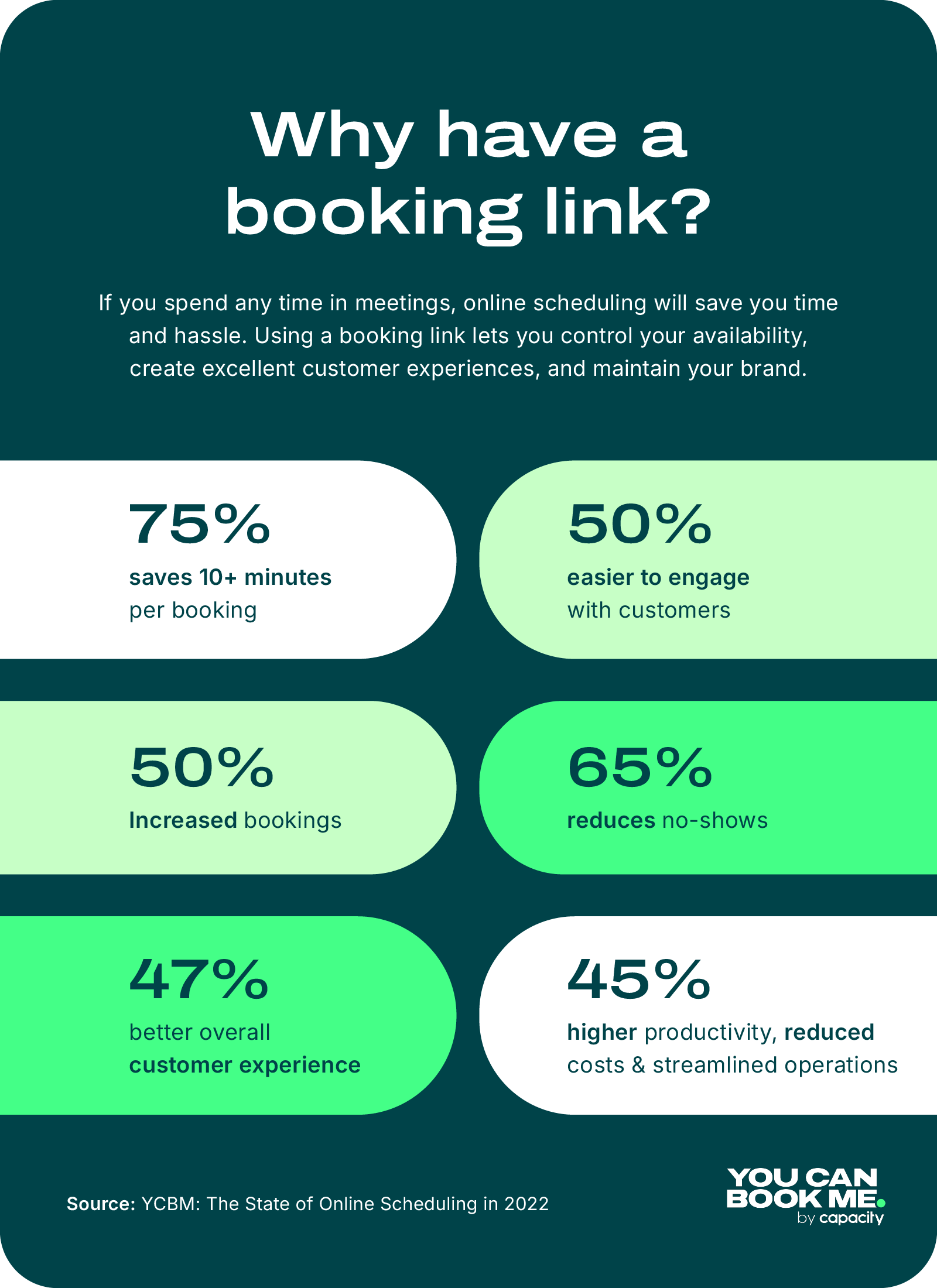
One of the best things about using an online scheduling tool is the flexibility you have for sharing your availability using your booking links.
You can use as many ways as you like that match your style and your appointments. Here are some of our favorite ways that companies, teams, and solopreneurs embed and share their YouCanBookMe (YCBM) booking link.
The simplest approach: copy your booking link and paste it wherever the conversation is already happening. This works in email threads, Slack messages, WhatsApp, LinkedIn DMs, or any direct message channel you use.
With YouCanBookMe, you can create multiple booking pages for different meeting types—so you can share a "30-min intro call" link in one context and a "60-min strategy session" link in another, without any extra setup. Alternatively, you can add multiple appointment options to one booking page, and let your clients/team members choose which one is best for them!
Real-world example
Take an example from YCBM’s content writer, Paulina, who received an inbound inquiry regarding a potential writing project on LinkedIn. Rather than going back and forth to set up a meeting time with a lead based in the United States while she is based in Europe, she simply shared her YCBM link to let the person pick the most convenient time.
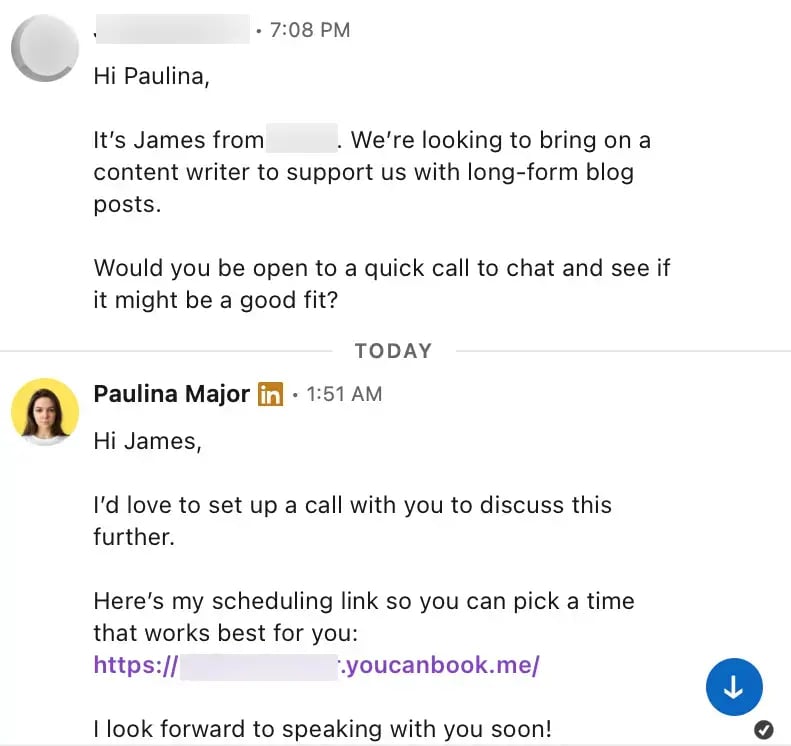
The best part is that YouCanBookMe also handles time zone conversion, meaning the meeting is automatically scheduled at the correct time for both parties without any confusion.
💡 Best practices:
- Save your booking link somewhere you can grab quickly—a pinned note, a text expander, your browser bookmarks.
- Install the YouCanBookMe Chrome extension, and your booking links will always be one click away. You can copy the correct link and paste it straight into an email, a chat message, or wherever you're working, without breaking your flow.
- In email, bold or hyperlink the CTA text ("Book a time here") rather than pasting a raw URL.
Embedding your booking page directly into your website is one of the highest-converting ways to capture appointments. Visitors can book without ever leaving your site. In fact, many won't even realize they're interacting with a third-party tool—especially since YCBM lets you fully customize your booking page to match your brand.
You can embed on a dedicated "Book a call" page, your homepage, or a service or pricing page. Some businesses embed different booking pages in different parts of their site—a "Book a demo" form for new prospects and a "Support call" page for existing customers, for example.
YCBM makes it straightforward to embed your scheduling page anywhere on your site, including on platforms like WordPress, Squarespace, and Webflow.
Real-world examples
A great example of this in action is Chameleon Dental, a digital dental lab based in North Carolina. They’ve embedded their booking page directly on their contact page, so anyone visiting their website can immediately book time without needing to email or call.
It creates a seamless experience, especially for high-intent visitors who are already considering working with them.
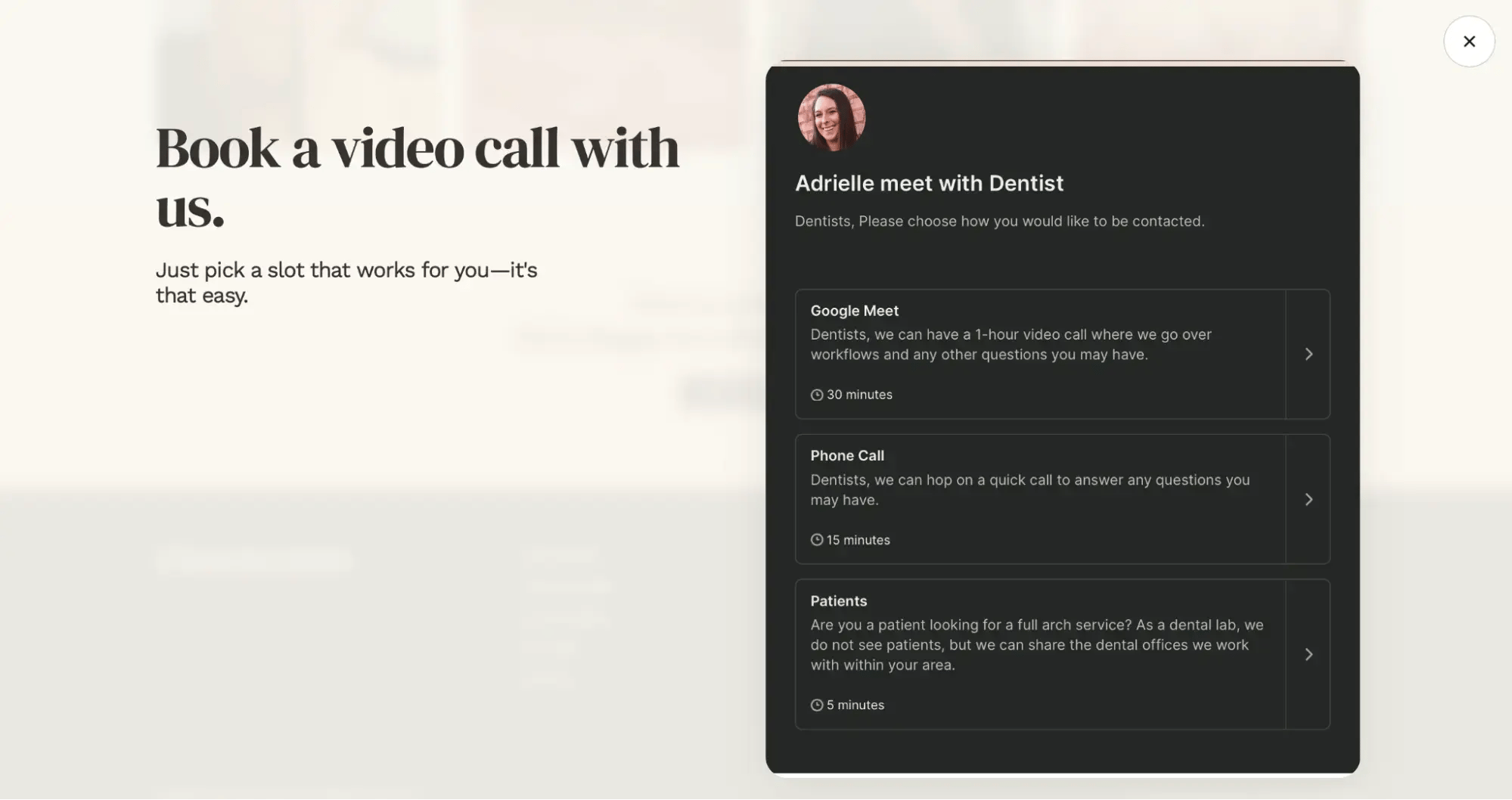
This approach has paid off: 90% of Chameleon Dental's calls are now booked automatically through their YCBM scheduling page, helping them scale their operations while keeping things efficient.
UK lead generation agenda, Pearl Lemon Leads, took a different approach, embedding "Book a call" buttons throughout their site that lead to their YCBM calendar. This makes it easy for prospects to book at the moment interest is highest, which has helped them increase leads and sales by 25%.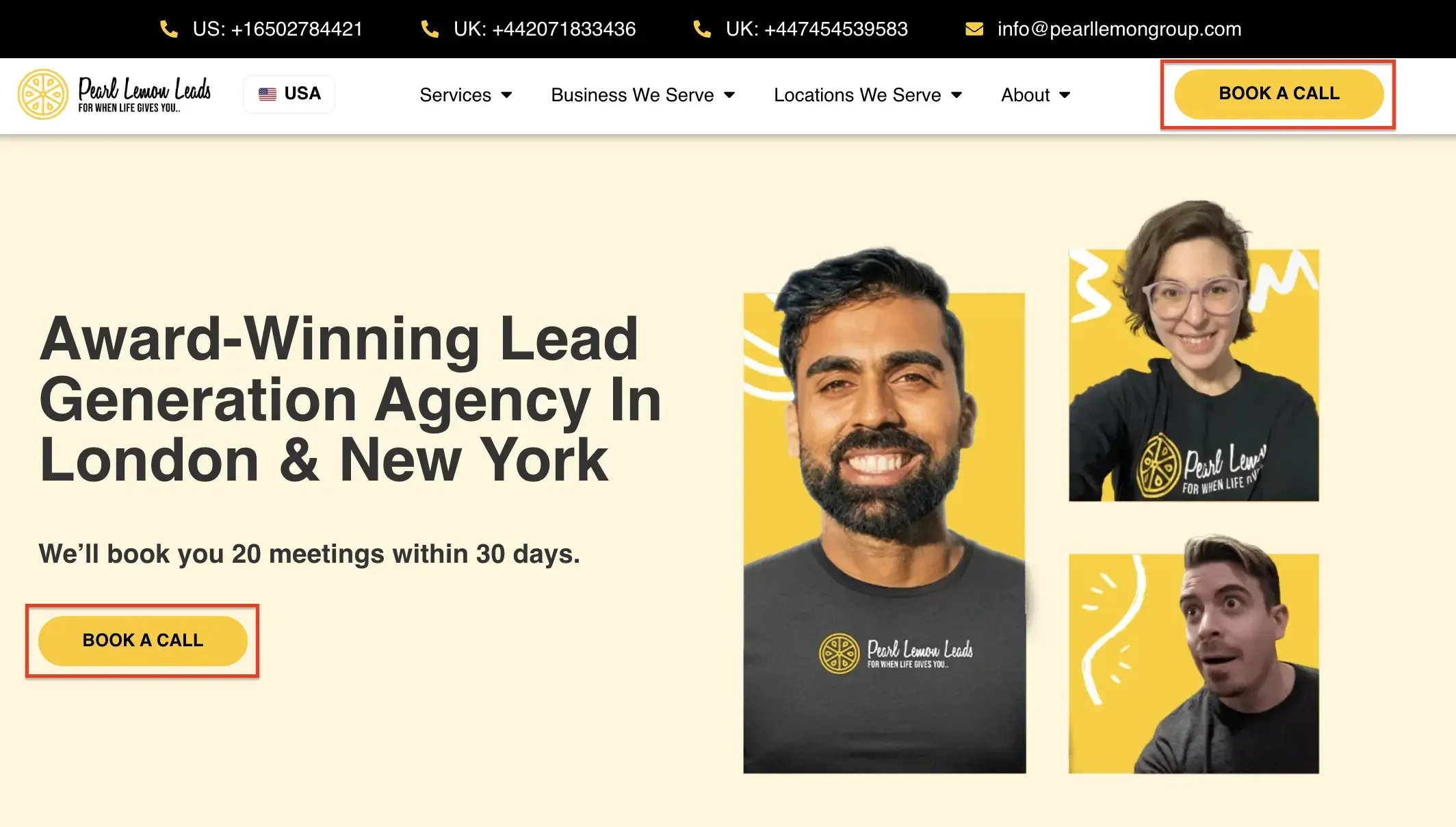

💡 Best practices:
- Don't bury your embedded booking page at the bottom of a long webpage! The closer it is to your main call-to-action (your pricing, your service description, your pitch), the more likely someone is to actually use it.
- Add a short line of text above the embed explaining what happens when someone books.
- You don't have to embed it in just one place! A booking page (or button) on your homepage, another on your contact page, and one at the bottom of a key service page means you're catching visitors at different stages of their decision.
Social media is where a lot of your leads and existing customers are spending time, so making your booking link accessible there is a natural extension of your presence. There are a few distinct ways to do this:
- Profile bio: Add your booking link directly to your bio on Instagram, X (Twitter), or TikTok. On Instagram, your bio link is often the only clickable URL on your profile.
- Link-in-bio tools: Use a tool like Linktree to create a landing page with multiple links, including your booking page, so you can direct followers from a single bio URL.
- LinkedIn "Book an appointment" button: LinkedIn lets you add a call-to-action (CTA) button to your profile. Set it to link directly to your YouCanBookMe page (or a website page where you've embedded YCBM) so anyone visiting your profile can book instantly.
Real-world examples
SafariBookings does this really well. They use a drop-down menu in their Instagram bio to guide users to different parts of their business, including a dedicated “Book now” link powered by YouCanBookMe.
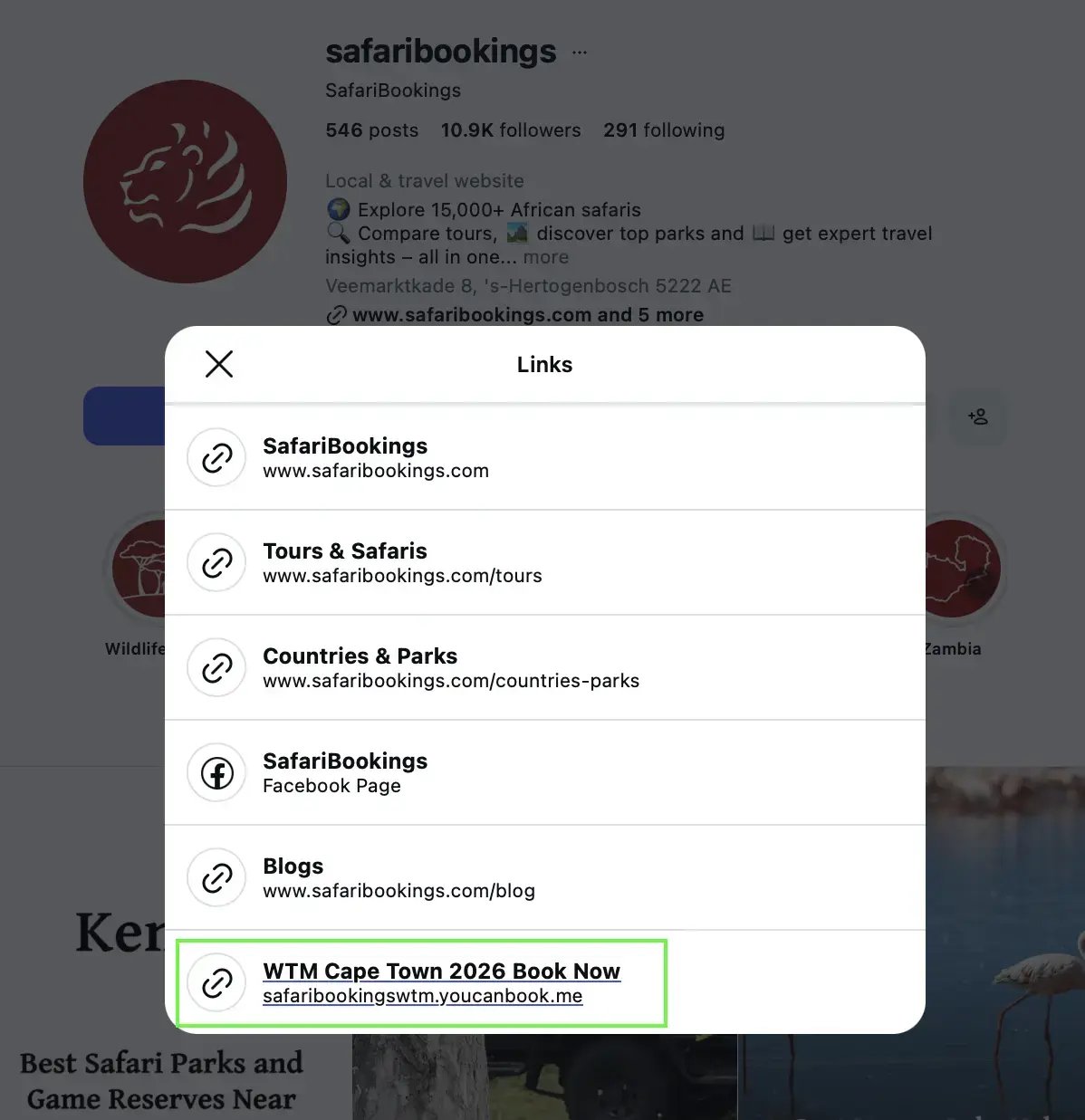
SafariBookings has used YouCanBookMe to manage over 8,000 meetings worldwide. And that just proves that making your booking link consistently visible (even alongside other links) can drive real, ongoing results.
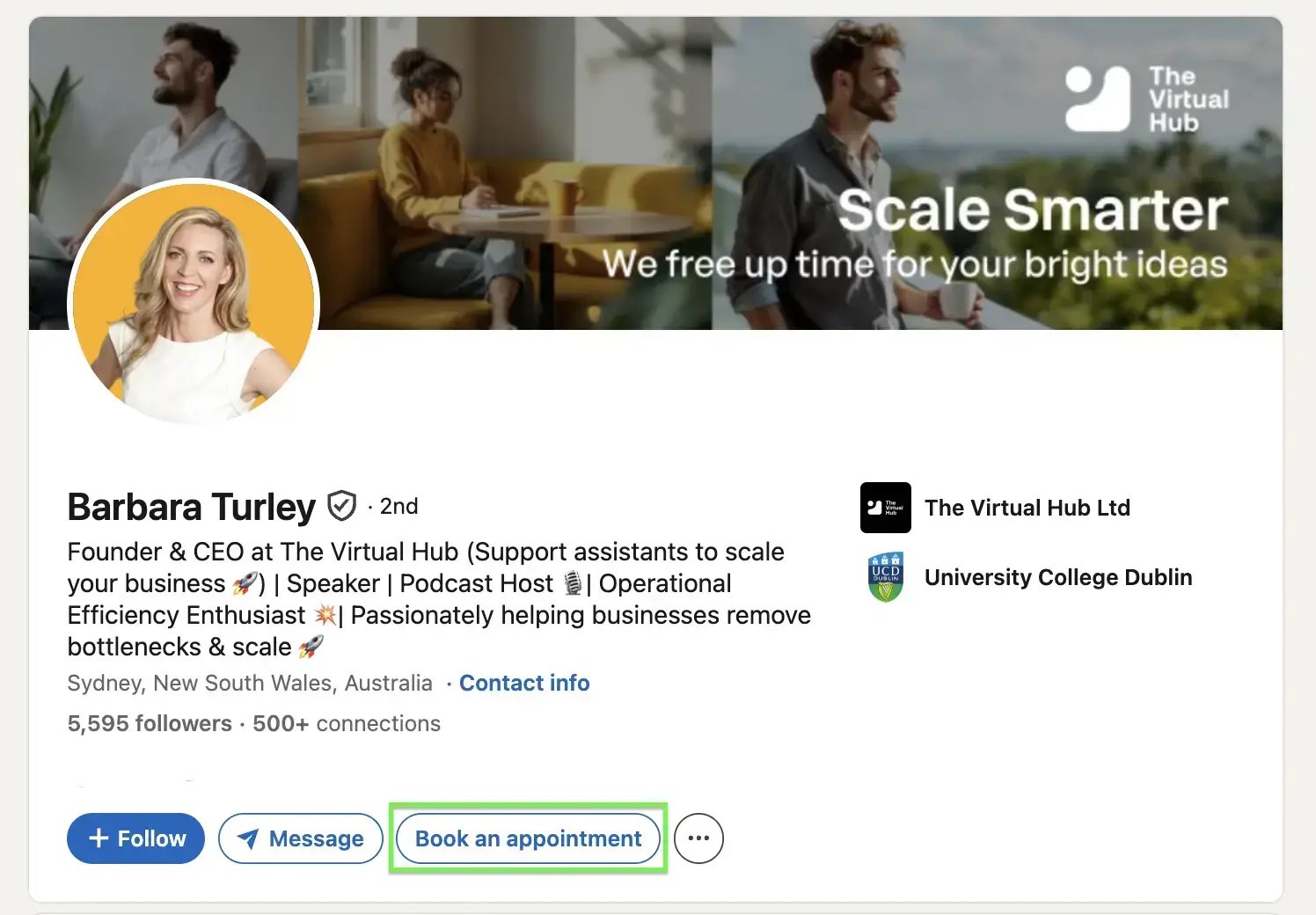
For Barbara Turley, founder and CEO at The Virtual Hub, being easy to book on LinkedIn was a top priority. She added a prominent “Book an appointment” button to her profile, making it simple for people to schedule time with her directly through her YouCanBookMe calendar.

💡 Best practices:
- Shorten or alias your booking URL if you hit the character limit.
- Treat your social media bio, headline, or tagline as a micro-pitch. If it clearly says what you do and who you help, people are already half-sold before they even click the booking link.
Don't just stick your booking link in your bio and hope people find it. Promote it actively! Share posts that highlight your availability and give people a reason to act now. If you run a service-based business, create a sense of urgency with messages like, “Only 3 spots left this month—secure yours now. Link in bio!” The clearer and more compelling your call to action, the more likely people are to book.
Real-world example
We love what Sandra Mo, founder of Lashes by SxMo, does on her Instagram. She regularly shares her availability in visually branded posts, like her monthly calendar, so clients can quickly see what’s open without needing to ask.
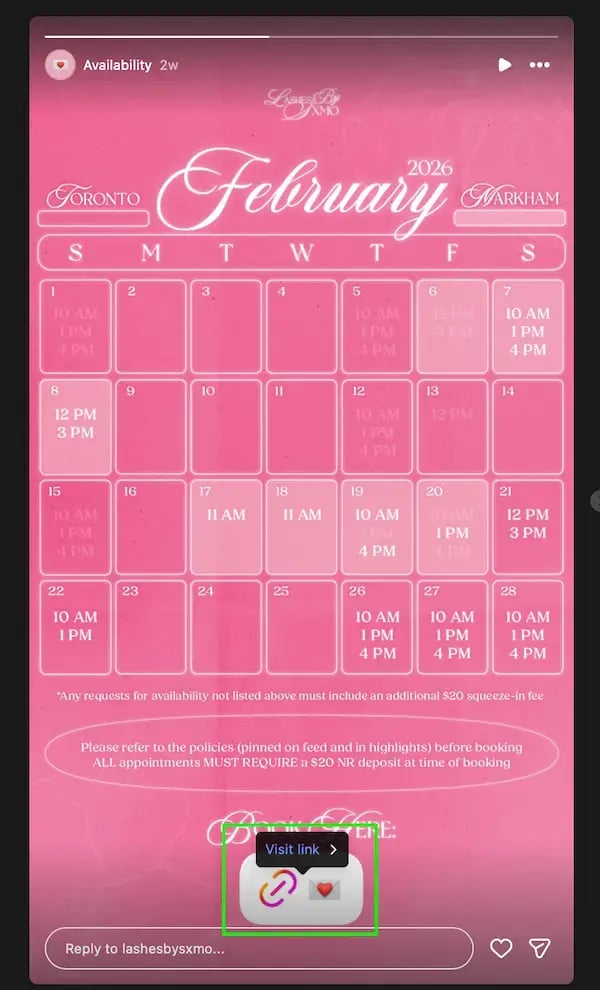
She pairs these posts with a clear call to action, directing clients to her booking link via Instagram Stories (“Visit link”) or her bio. It’s simple, effective, and meets her audience where they already spend time.
💡 Best practices:
- Use different formats to increase reach. Mix feed posts, Stories, Reels, and carousels—each gives people another chance to see and click your booking link.
- Leverage urgency and scarcity (authentically). Limited availability, seasonal offers, or new client openings can nudge action.
- Repeat regularly. Most followers won’t see a single post. Reshare your booking CTA weekly or monthly, depending on your business.
Make it easy for people to book you
Share your YouCanBookMe link anywhere—LinkedIn, email, your website, or even a QR code—and let clients schedule time with you instantly, without the back-and-forth.

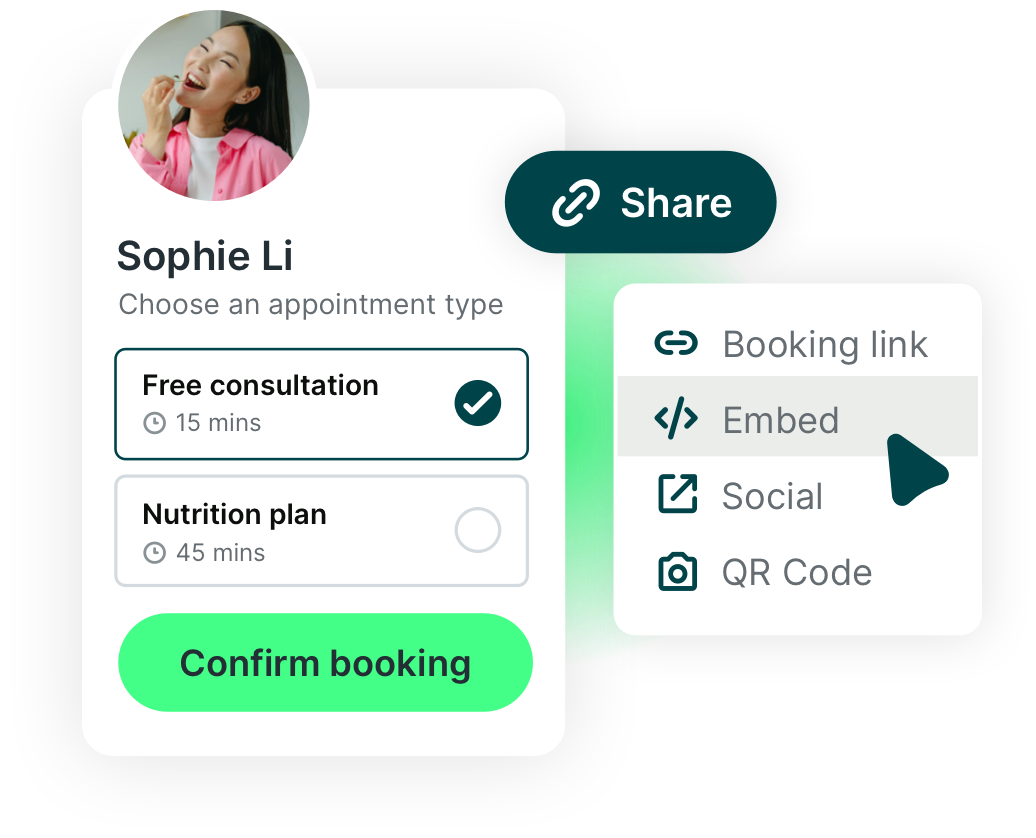
Your email signature is one of the most underused assets in your outreach. Every email you send is an implicit touchpoint, so why not make it easy for anyone you're already emailing to book time with you?
A simple "Book time with me" line with a hyperlink at the bottom of your signature means anyone reading your emails can access your calendar without you having to think about it. It works passively for inbound replies, cold outreach follow-ups, and everything in between.
Real-world example
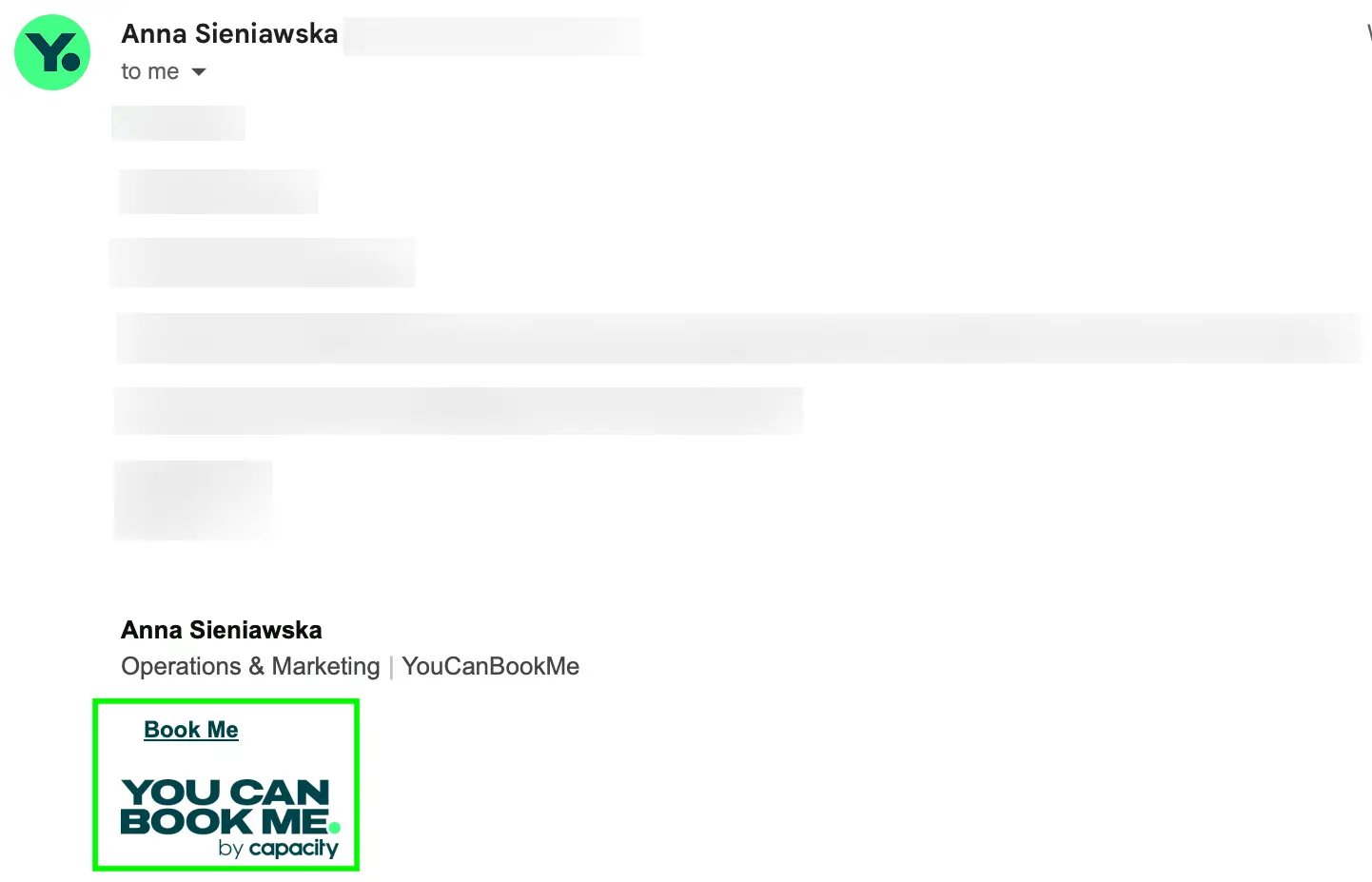
Anna Sieniawska, Head of Marketing at YouCanBookMe, shows how teams can effectively use their email signature to make booking effortless. Instead of going back and forth over availability, she includes a simple “Book me” link directly in her signature, so anyone receiving the email can schedule time instantly.
💡 Best practices:
- Use a short CTA like "Book a call" or "Schedule time with me" rather than pasting the raw URL.
- Match the styling to the rest of your signature. Consistent formatting looks more polished.
- If you offer multiple meeting types, link to your main booking page and let appointment types do the work of segmenting.
Using business cards? Heading to a conference where your signage will be on display? Handing out brochures to market your business locally?
Turn your scheduling link into a QR code and add it to your printed materials. You can include it on business cards, notice boards, or any other surfaces where people might see it. This makes it quick and easy for anyone to scan and book on the spot.
Real-world example
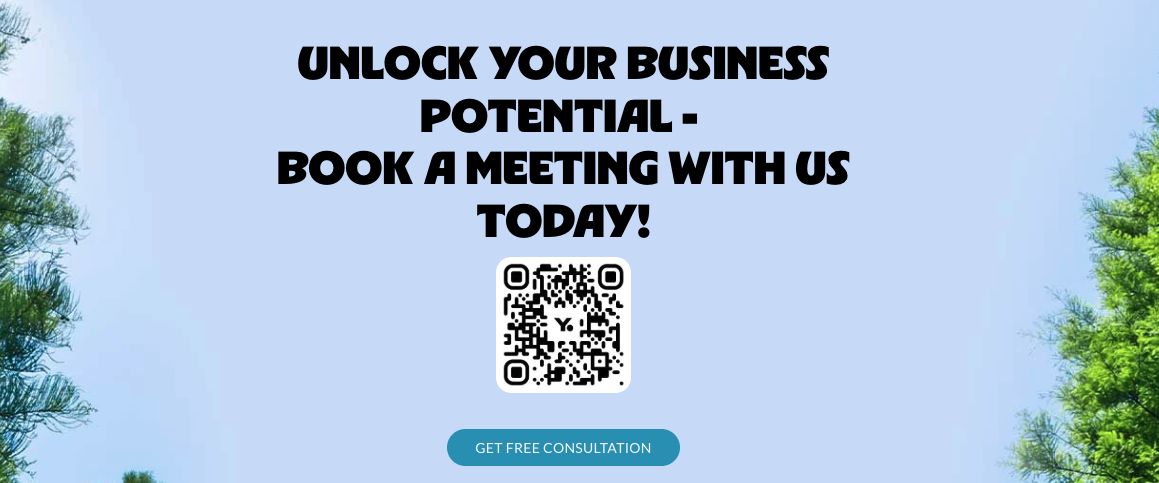
Alex Falcon Huerta, founder of Soaring Falcon, took a mobile-first approach—using a simple QR code that links directly to her YouCanBookMe booking page, so clients can scan and schedule instantly. It cuts out back-and-forth, handles time zones automatically, and keeps her calendar under control without the usual scheduling chaos.
💡 Best practices:
- Always test your QR code before printing by scanning it yourself on a phone to confirm it works.
- Add a short line of text near the QR code explaining what it does ("Scan to book a consultation"). It’s unlikely people will scan a random QR code, so give them the context!
- Check the print quality to ensure it’s actually scannable.
Before you share your booking link far and wide, a few minutes of setup will make a big difference to the experience (for you and for the people booking).
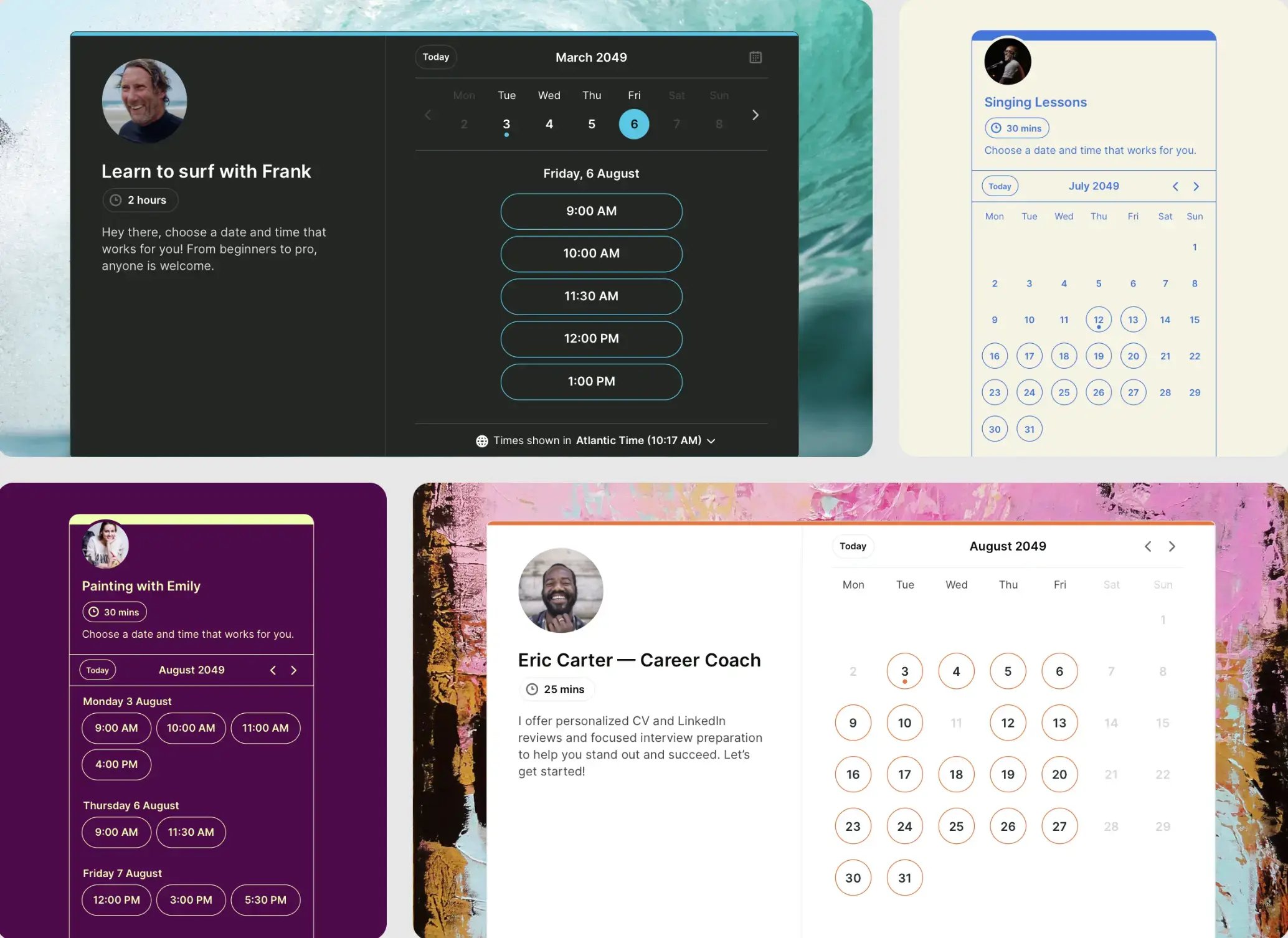
First impressions count. Your booking page should match your brand. Luckily, with YCBM, you can customize your booking page with your logo, colors, background images, and even custom footers. You can also personalize your notifications—from the welcome note and booking instructions to confirmation pages, meeting confirmations, reminders, and follow-ups. All of this helps signal professionalism and build trust before the booker even picks a time!
This sounds obvious, but it's easy to share a booking link before completing setup. Make sure your calendar is synced so your real-time availability is accurate. If you use multiple calendars (personal and work, for example), connect them all so there are no gaps or double-bookings.
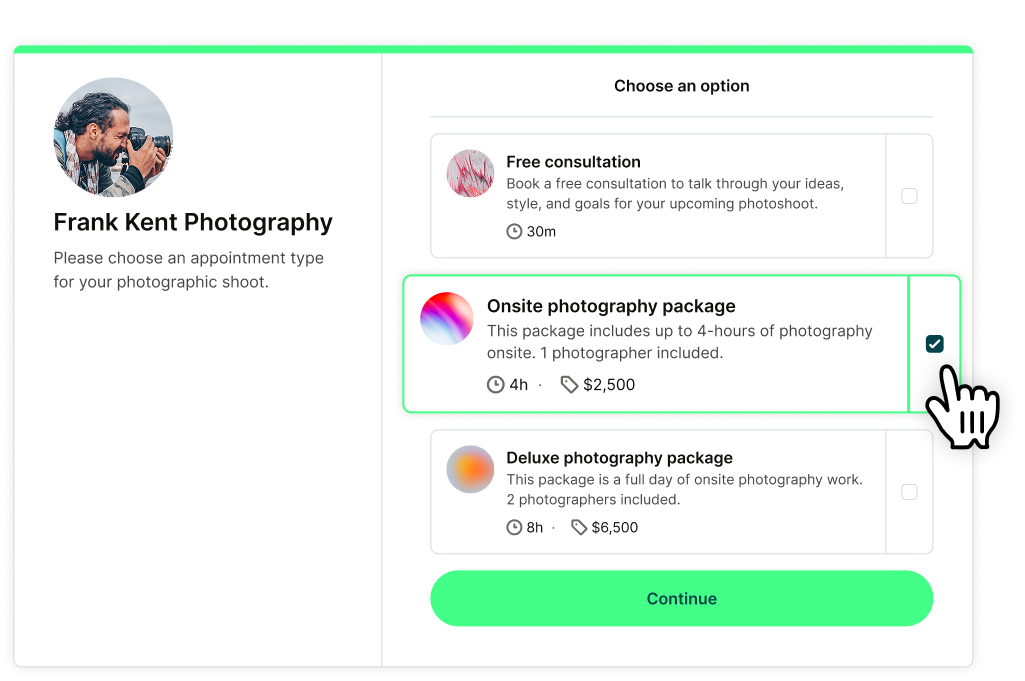
If you offer different types of meetings, like discovery calls, strategy calls, paid consultations, or interviews, set them up as distinct appointment types on your booking page. This lets bookers self-select the right session without needing to explain it to you first, and it helps you stay organized on the back end.
Your booking page isn’t just for picking a time—it’s a chance to ask a few key questions upfront! With YouCanBookMe, you can customize your booking form to capture important details or qualify leads before the meeting is even booked. That means fewer follow-ups, better-prepared conversations, and a more personal experience for every booking. You can also send that info straight to your CRM and other tools, so everything stays organized without extra work.
Don't let your booking page become a free-for-all. Use availability settings to define when you're open for bookings, how much notice you need before a meeting, and how much buffer time you want between appointments. Having these guardrails in place protects your time while still giving bookers plenty of options.
Ready to share your booking link?
At the end of the day, every extra step between interest and booking is a chance to lose someone. The strategies above can help you shorten that gap, making it as easy as possible for people to book with you. Small tweaks in where and how you share your link can make a big difference in how many meetings actually land on your calendar.
YouCanBookMe gives you a fully customizable booking page you can share in all of the ways above without needing separate tools for each. Sign up for free today and start sharing.
FAQs
What is a booking link?

A booking link is a URL that takes someone directly to your scheduling page, where they can see your real-time availability and pick a time that works for them—without any email back-and-forth.
Unlike sharing your calendar directly (which can expose personal details) or offering static options like "Tuesday at 2 PM or Thursday at 4 PM?" (which immediately creates more back-and-forth), a booking link gives the other person full visibility into your available slots and lets them self-serve. It's connected to your calendar in real time, so there's no risk of double-booking, and it can automatically send confirmations and reminders once a meeting is booked.
How do I create a booking link?
Can multiple team members each have their own booking link?
Yes. Every team member on your YouCanBookMe account can have their own booking page with their own availability, their own branding, and their own unique link. You can also create a shared team booking page where bookers select a specific person, or use round-robin scheduling to distribute bookings automatically across the team.
Can I share my booking link on social media?
Yes, and it's, in fact, one of the most effective ways to use it! You can add it directly to your bio on LinkedIn, Instagram, X, or TikTok, use a link-in-bio tool like Linktree to feature it alongside other links, add a "Book now" button to your LinkedIn profile, or share it in posts and stories when you're opening up availability or promoting a service.
What's the difference between a booking link and an embedded booking page?
A booking link is a standalone URL that takes someone to your booking page when they click it—they leave whatever page they're on and go to your booking page. An embedded booking page is the same scheduling experience, but built directly into your website, so bookers never have to leave.
Embedding tends to convert better because there's no redirect—the booking happens right where the visitor already is. Both use the same underlying booking page; it's just about where and how it's presented.

Written by
Kate Reynier
Kate was an early YouCanBookMe employee and loved supporting our Customers for almost a decade. She's now focused on spreading the word about online scheduling, how to improve productivity, and the Oxford comma.
Get started today
Join thousands of coaches, consultants, and entrepreneurs who use YouCanBookMe to power their business. Get your first booking in a few minutes.


 4.7 / 5 — Trustpilot

