
12 Best Scheduling Apps in 2026: Direct Comparisons
-min.png?width=100&name=image%20(21)-min.png)
Create your free booking page
Know that feeling when you're staring at an endless sea of options and can't decide? That's the SaaS market for you, especially when it comes to appointment scheduling software. And every new tool just adds to the confusion.
But don't sweat it, we've got your back.
We hunkered down, sipped gallons of coffee, and sifted through the maze of appointment scheduling apps for you. So sit back, relax, and pick the best scheduling app for your business in minutes!
Let's dive in.
Want to skip straight to the comparisons? Click here!
A scheduling app is a digital tool that helps you manage your time by making it easier to book, organize, and keep track of appointments, meetings, and other event types.
Whether you're a busy professional, a freelancer juggling multiple clients, or someone just trying to stay on top of personal commitments, online scheduling software can take a lot of the stress out of coordinating your work and personal calendar.
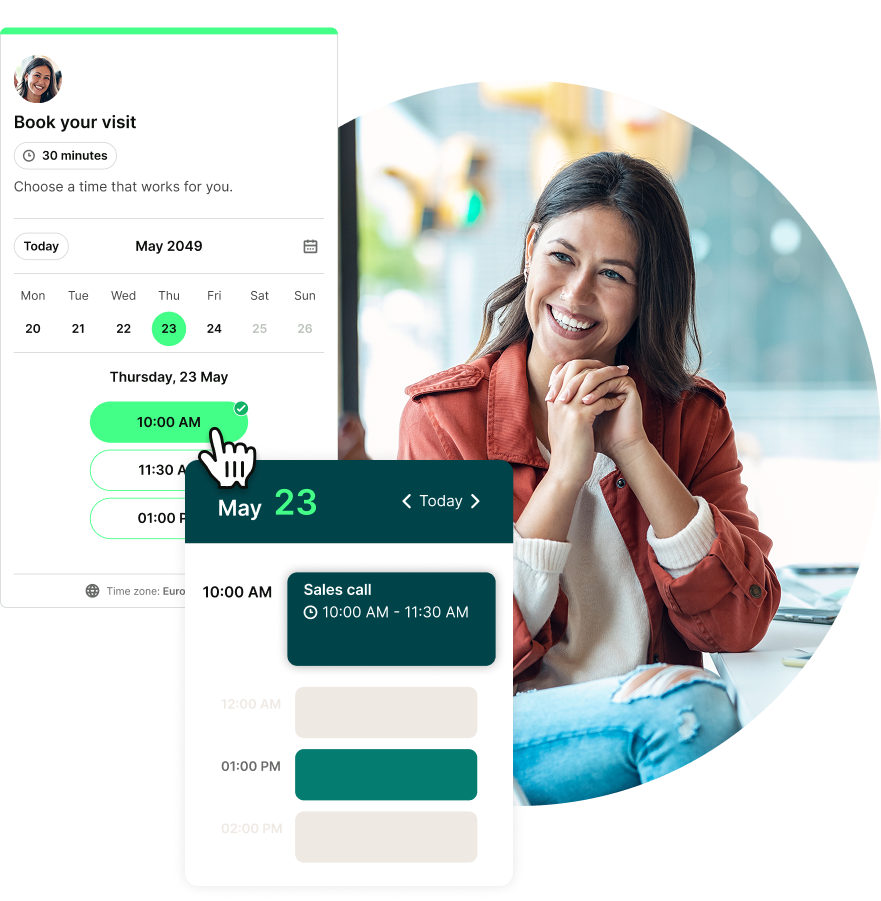
Instead of endless back-and-forth emails trying to find a time that works, you can simply share scheduling links and let bookers choose a slot that fits your availability.
Most scheduling tools also offer helpful features like automated email and SMS reminders, calendar integration, and even time zone detection—so you never miss a meeting or double-book yourself again.
In short, a good appointment scheduling app puts your calendar on autopilot, saving you time and helping you stay organized—whether you’re booking client sessions, team check-ins, or coffee with a friend.
You’ll save the most time if you choose Clockwise.
You’ll get more integrations if you switch to Calendly.
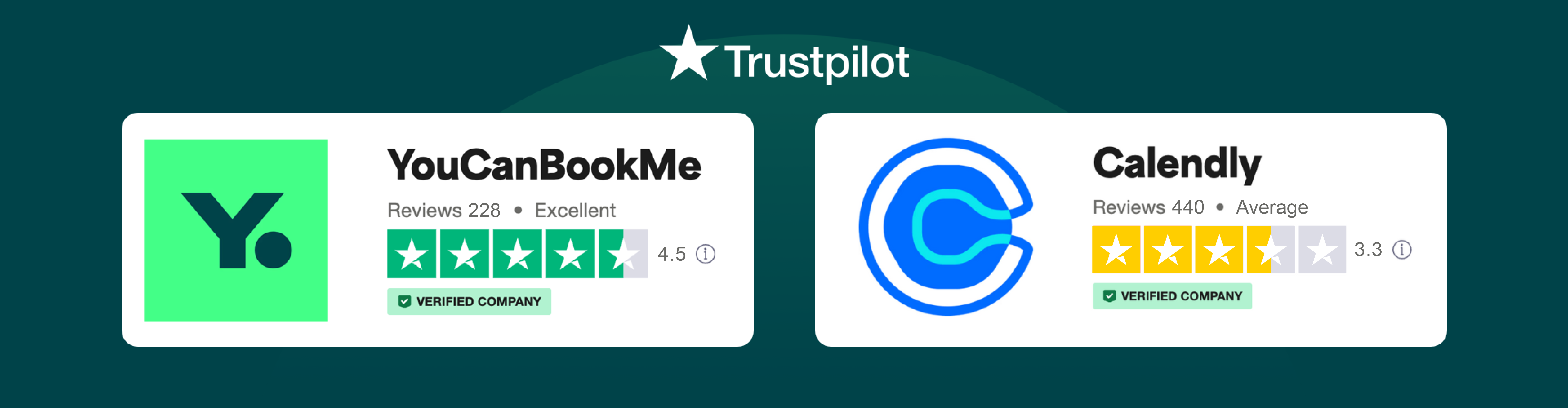
You’ll get the most personalization power if you choose YouCanBookMe.
Best overall |
Runner-up |
Best for enterprises |
|
|
|
|
|
YouCanBookMe |
Clockwise |
Calendly |
| Best for small business owners who need a highly-customizable tool. | Best for personal time management and blocking off focus time. | Best for enterprises or large teams with a decent budget. |



A great business scheduling app does more than just book meetings. It removes friction from the process entirely—cutting back-and-forth, staying in sync with your calendar, and quietly handling changes like cancellations, reschedules, and reminders so your schedule runs itself.
At a minimum, that means offering simple booking pages, real-time calendar integration, and automated notifications to keep availability accurate and prevent double bookings. When those basics work well, you spend less time managing your calendar and more time focusing on your actual work.
Where scheduling apps really differ is in how they support your workflow. Some are built for client-facing bookings with branding and payments, others for team coordination or internal productivity. The buying guide below breaks down which tools work best for each use case. 👇
No booking tool works the same for everyone. To help you compare options quickly, we evaluated each tool using four criteria that matter most for day-to-day scheduling:
- Ease of use: Because who has time for a clunky booking tool that takes ages to learn? We’ve rated each tool based on how quick and easy it is to use, so your team can hit the ground running and increase meeting productivity in no time with no scheduling conflicts.
- Integrations: Your booking tool shouldn’t live in a silo. We looked at how well each option connects with popular calendars (like Google or Microsoft Calendar) and business tools, including whether it supports two-way calendar syncing to prevent manual updates and overlapping meetings.
- Value for money: We all work hard for our money, so we've looked at the scheduling features and additional features each tool offers, compared them to the price tag, and evaluated what you get for the price you pay. We list a few free scheduling apps but also a good deal of paid booking software that is worth every penny.
- Customization: Your booking page is often the first touchpoint with a client. That's why we’ve rated each tool based on how much freedom it gives you to customize your booking page according to your personal style or company branding.
Note: low scores aren’t always bad!
Remember, each online scheduling tool has its specialty. Whether you're a large enterprise or a one-person show, the key is to find the combination of features that work best for you.
The 12 best scheduling apps of 2026 |
1. YouCanBookMe (YCBM)A scheduling platform that is the best all-around option for client-facing scheduling, offering deep customization, powerful automation, and smooth booking across time zones and languages. It’s ideal for individuals and teams that want a polished, flexible booking experience that scales with their business. Read more about YouCanBookMe |
2. HubSpot Meeting SchedulerThis scheduling app is best for sales teams already using HubSpot, keeping scheduling tightly connected to CRM data and pipeline activity. It supports qualification forms, round-robin meetings, and analytics without adding extra tools. |
3. CalendlyPowerful business scheduling that's a strong choice for large teams that need scalable scheduling, workflow automation, and extensive native integrations. It works well for organizations managing high volumes of meetings across departments. |
4. SimplyBook.meOffice scheduling software handy for medical offices and clinics, with features like intake forms, resource management, and compliance-friendly workflows. It’s a good fit for practices that need more structure than a basic booking link. |
5. Square AppointmentsIdeal for service-based businesses that want scheduling and payments in one system, especially across multiple locations. It’s particularly useful if you already rely on Square’s POS ecosystem. |
6. DoodleWith an intuitive user interface, easy group polling, and integrations with Google Meet and Zoom, Doodle's software for scheduling is ideal for teams looking to schedule recurring group meetings and collaborate across different time zones. |
7. OnceHubA scheduler built for lead generation and qualification, turning scheduling into part of the sales funnel. With routing logic, voice IVA, chatbots, and CRM integrations, it’s well suited for revenue-driven teams. |
8. SetmoreA solid option for educators, coaches, and solo businesses running classes or recurring sessions. It combines simple booking flows with reminders, payments, budget-friendly pricing, and is free for up to four users. |
9. Google CalendarThe simplest choice for teams that want to schedule entirely within the Google ecosystem. It’s familiar, easy to use, and best for basic booking needs without advanced customization. |
10. ClockwiseRather than booking meetings, it's a smart calendar assistant that helps you manage time better with features like focus time scheduling, automatic meeting rescheduling, and detailed productivity insights. |
11. Zoho BookingsThis scheduling app works best for organizations already using Zoho apps, connecting scheduling directly to CRM data, staff availability, and internal workflows. It’s most effective as part of the broader Zoho ecosystem rather than as a standalone scheduler. |
12. ConnecteamBuilt for internal workforce scheduling, not client bookings—ideal for shift-based and frontline teams that need employee scheduling, time tracking, and team communication in one mobile-first platform. |
YouCanBookMe overview
Ever feel like you need a personal assistant just to manage your schedule? Bridget and Keith Harris certainly did, which is why they founded YouCanBookMe (YCBM) in 2011—to simplify the chaos and make scheduling a stress-free experience.
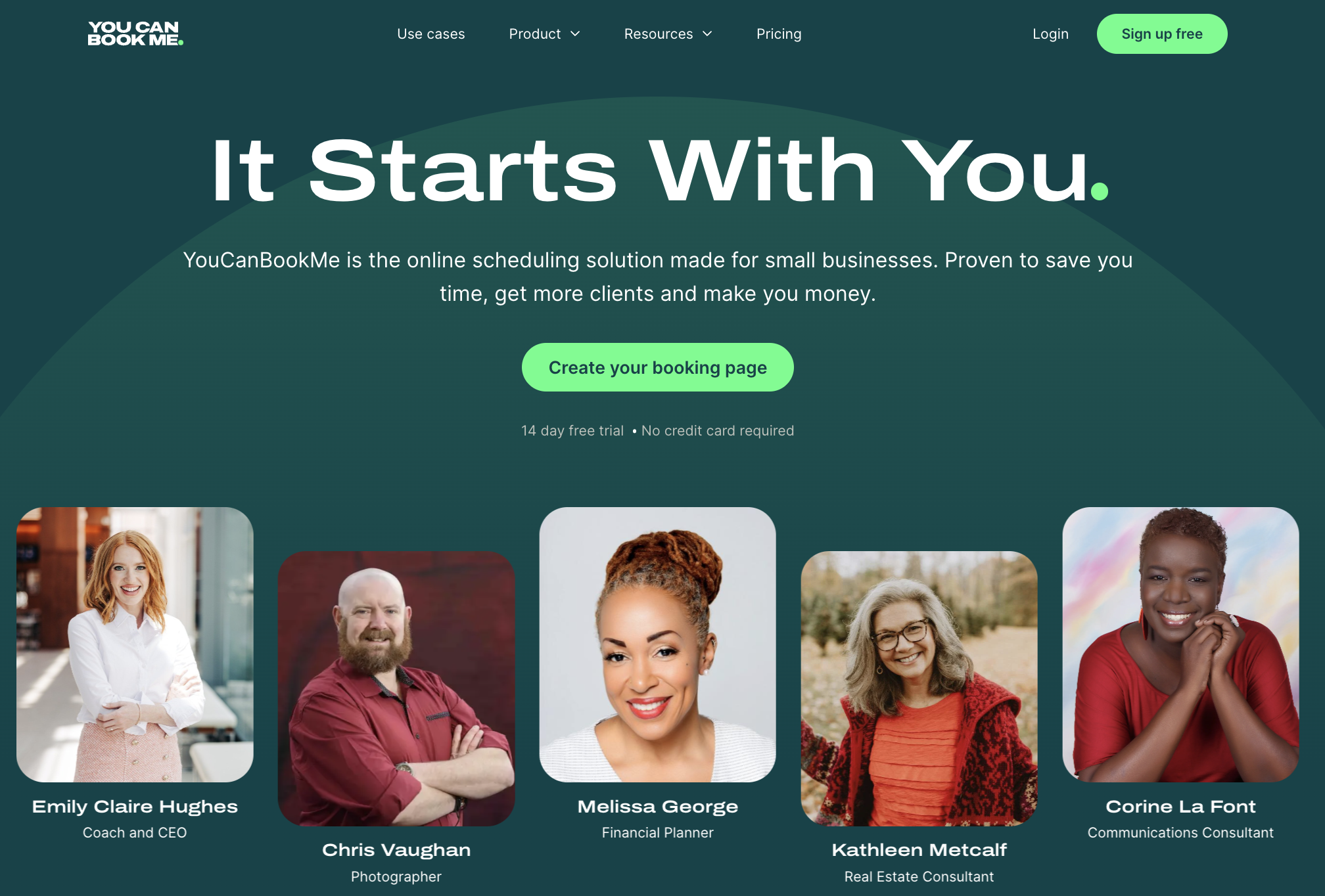
What truly sets YouCanBookMe apart from the many competing apps is the level of customization. Whether it's your brand or the tone of your email notifications, YCBM makes it easy to create the best and most personalized scheduling experience for your customers.
Make a great first impression
Get started with the most personalized meeting scheduler to build your business.

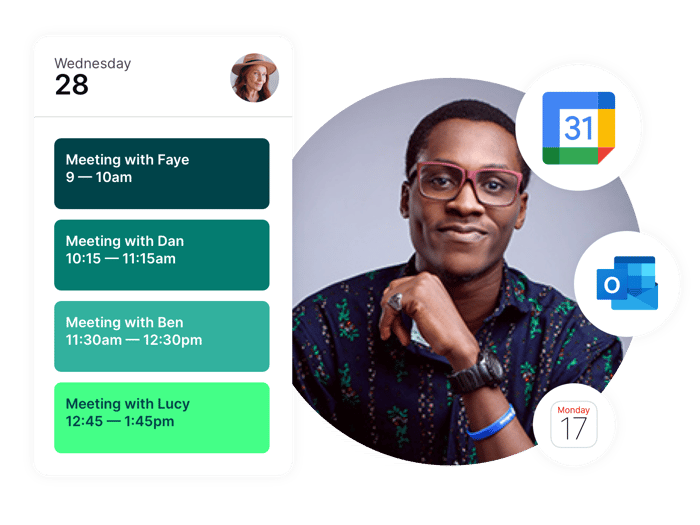
YCBM also supports translated scheduling pages in 44 languages (including Chinese and Arabic) and auto-detects local time. All these features make YCBM's scheduling software excellent for individuals and small businesses working across borders and in different time zones.
|
💡 YouCanBookMe just got even better! Check out 16 new features inspired by requests from business owners like you. |
Pros |
Cons |
|
|
YouCanBookMe features
Let’s take a look at features that make YCBM stand out from other scheduling platforms on the market:
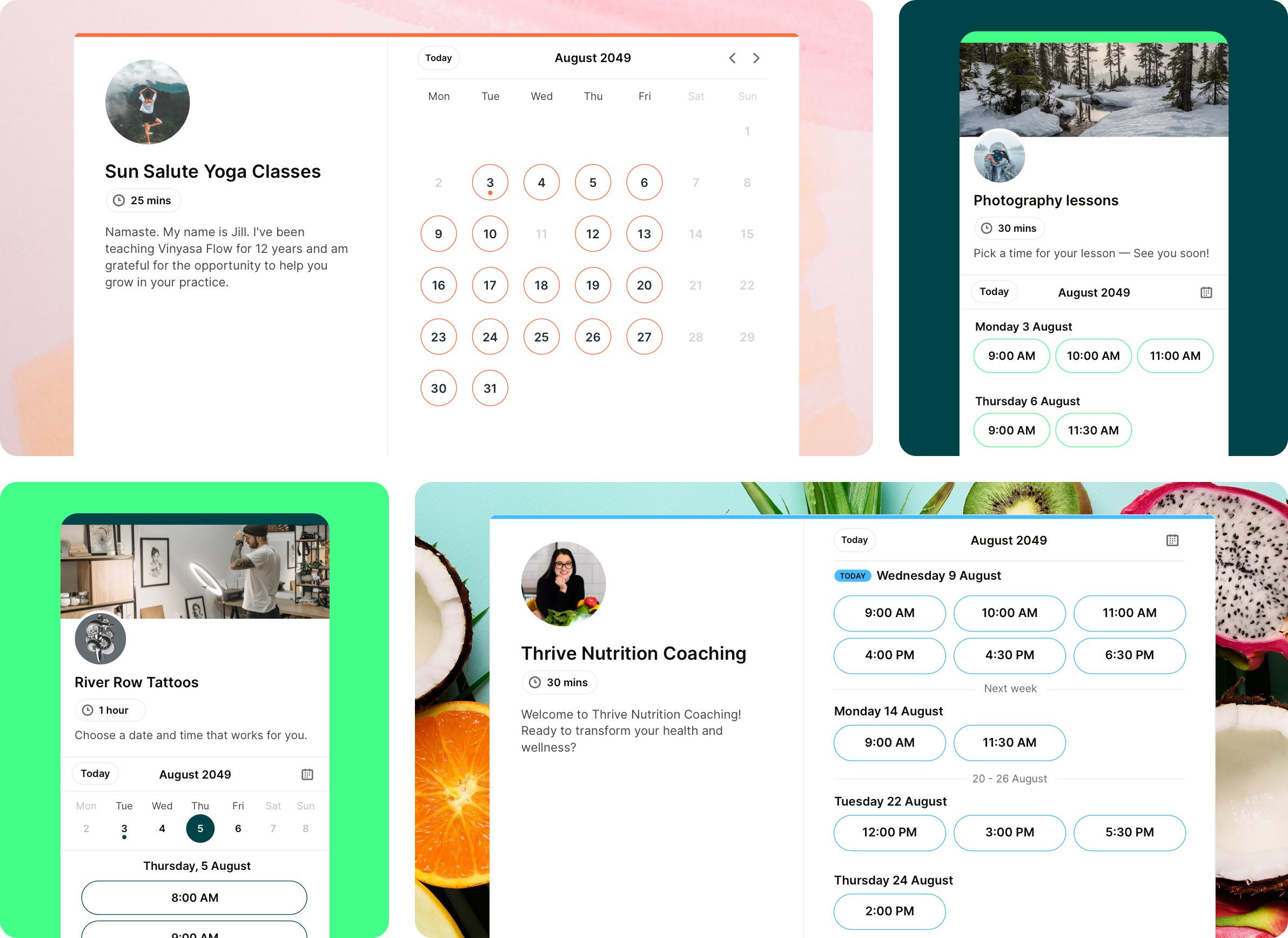
Rich booking page customization options
With YouCanBookMe, you can customize your booking page to the fullest. You can choose a booking page color from a rainbow palette, add a custom background, add a footer with a website or social link, and use the Markdown toolbar to stylize your booking page text and insert a logo.
Stay in control of your time
YCBM puts you fully in the driver's seat of your schedule, making sure your calendar works for you—not the other way around. With YouCanBookMe's robust availability settings, you can keep your day flowing to your exact specifications:
- Minimum notice periods—Whether two hours or two days, set a required notice time to prevent last-minute bookings.
- Built-in buffer times—Add padding between meetings for preparation, travel, or a coffee break.
- Password-protected bookings pages and single-use booking links—to ensure only the right meetings land on your calendar.
Automate and customize email and SMS notifications
YCBM allows you to fully automate email and SMS notifications. This means you can set up events that trigger these notifications. For example, you can send a meeting confirmation email to your bookers after a booking is made or an SMS reminder one hour before the meeting to avoid any possible no-shows.
YCBM pricing
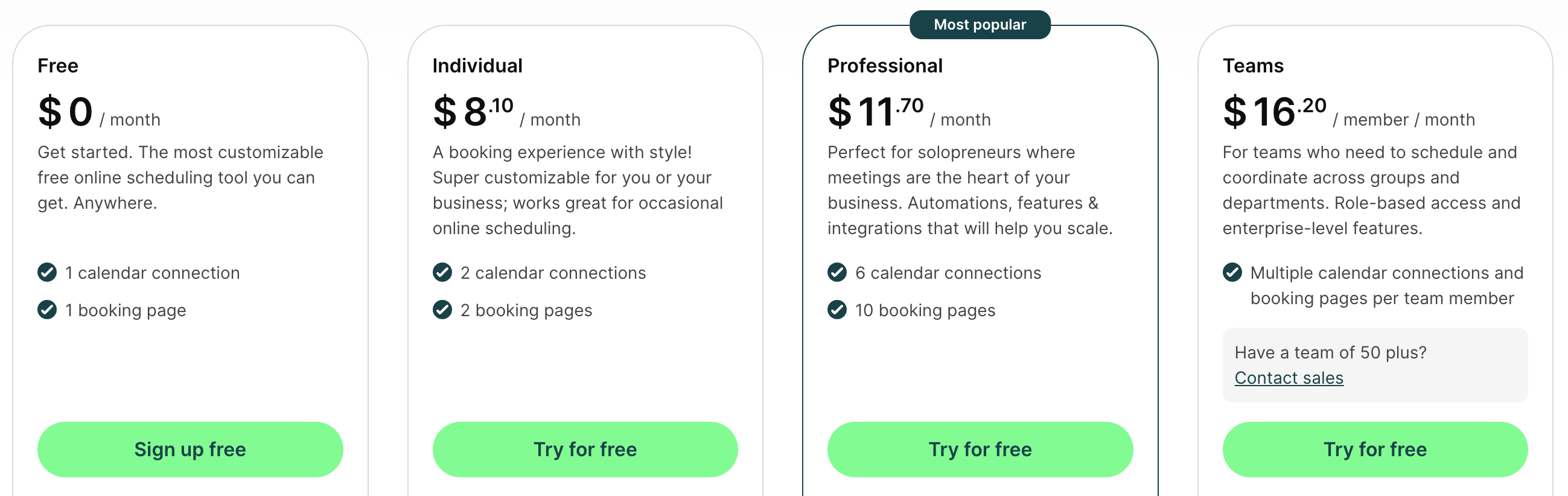
YouCanBookMe offers a generous free plan with one booking page and one calendar connection, instant virtual meeting links, payments for bookings, and custom booking forms. The paid plans are affordable, starting at just $8.10/month. You can also try YouCanBookMe free for 14 days, with no credit card required.
Use YCBM if:
- You want to offer a completely personalized and branded booking experience that syncs with your favorite calendars.
- You work with clients or teammates who speak different languages and could use automatically translated booking pages.
- You're looking for a tool with a rich set of features and a short learning curve that's super easy to get started with.
HubSpot Meeting Scheduler overview
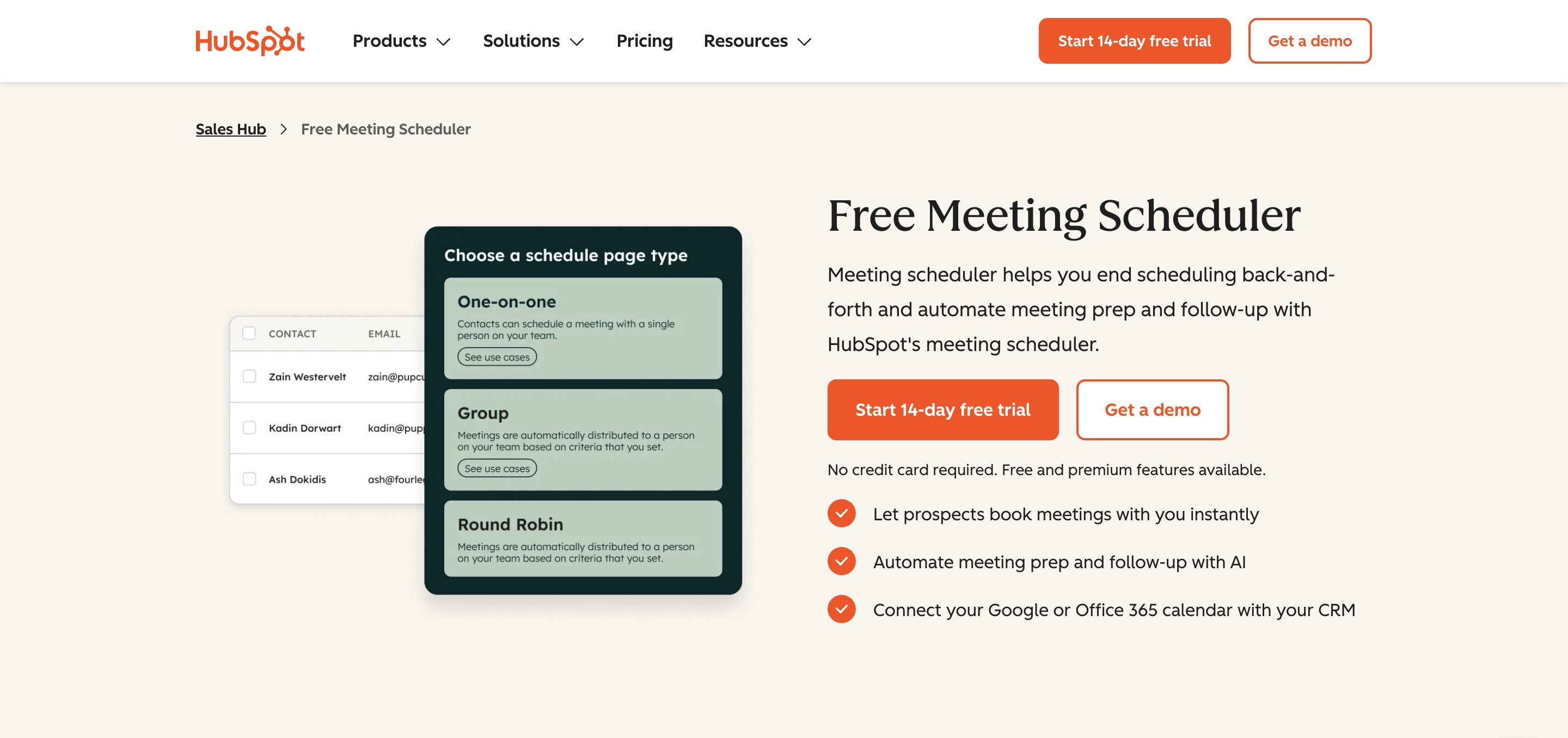
HubSpot offers a meeting scheduler designed to help sales teams make the booking process as convenient as possible. The platform lets sales reps embed their calendars onto their emails and web pages so prospects can easily pick a time that’s most convenient for them.
Plus, HubSpot’s Meeting Scheduler also comes with an ample selection of advanced features, some of which include the following:
- Integrate the platform with your contact lists so your database automatically adds or updates with details from the meeting scheduler
- Send out automated confirmation and meeting reminder emails
- Set up prospect qualifying form within the platform
- Set group or round-robin meetings
- Meeting analytics
Overall, HubSpot’s feature set makes it a strong option for sales teams seeking to streamline and simplify scheduling processes, especially if they're already using other tools in the HubSpot suite.
Pros |
Cons |
|
|
HubSpot Meeting Scheduler pricing
You can use HubSpot’s Meeting Scheduler completely for free!
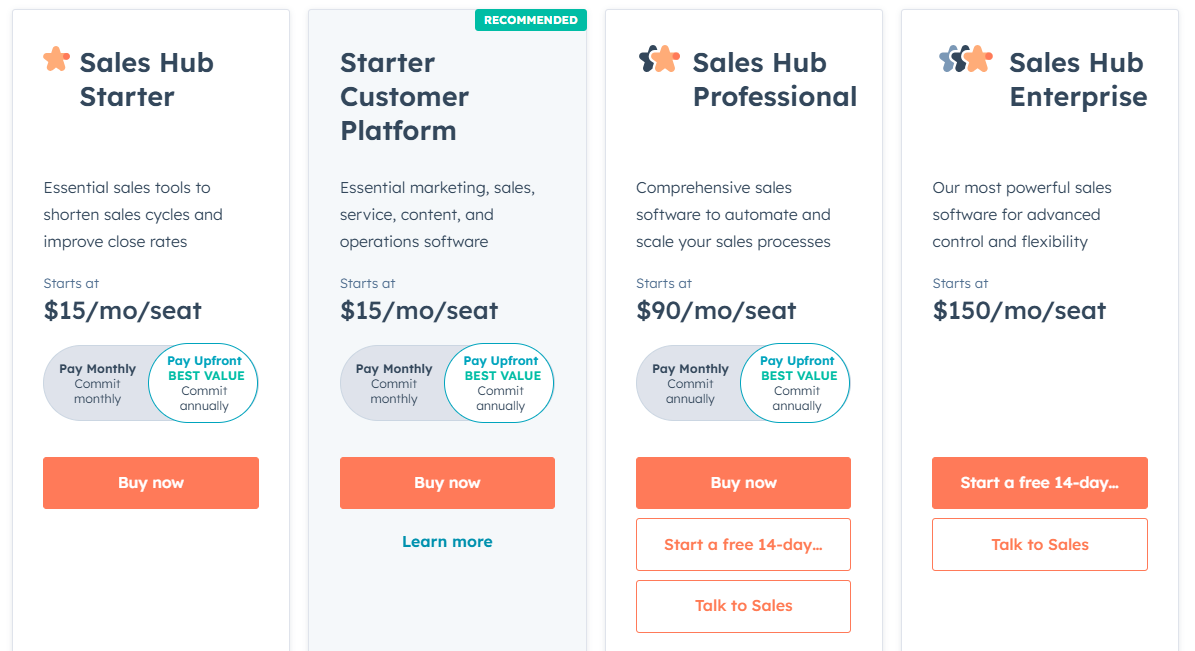
More advanced CRM features are available in the premium versions of HubSpot’s Sales Hub, which includes numerous other sales-specific tools, but the scheduler itself stays the same.
Paid plans start at $15/user per month (billed annually) and you can try them out with a free, 14-day trial.
Use HubSpot Meeting Scheduler if:
-
If you're a sales team looking to simplify scheduling for prospects.
- You're considering streamlining multiple aspects of sales activities through a dedicated sales platform.
- You already use other HubSpot tools and now want to manage and book meetings at scale.
Calendly overview
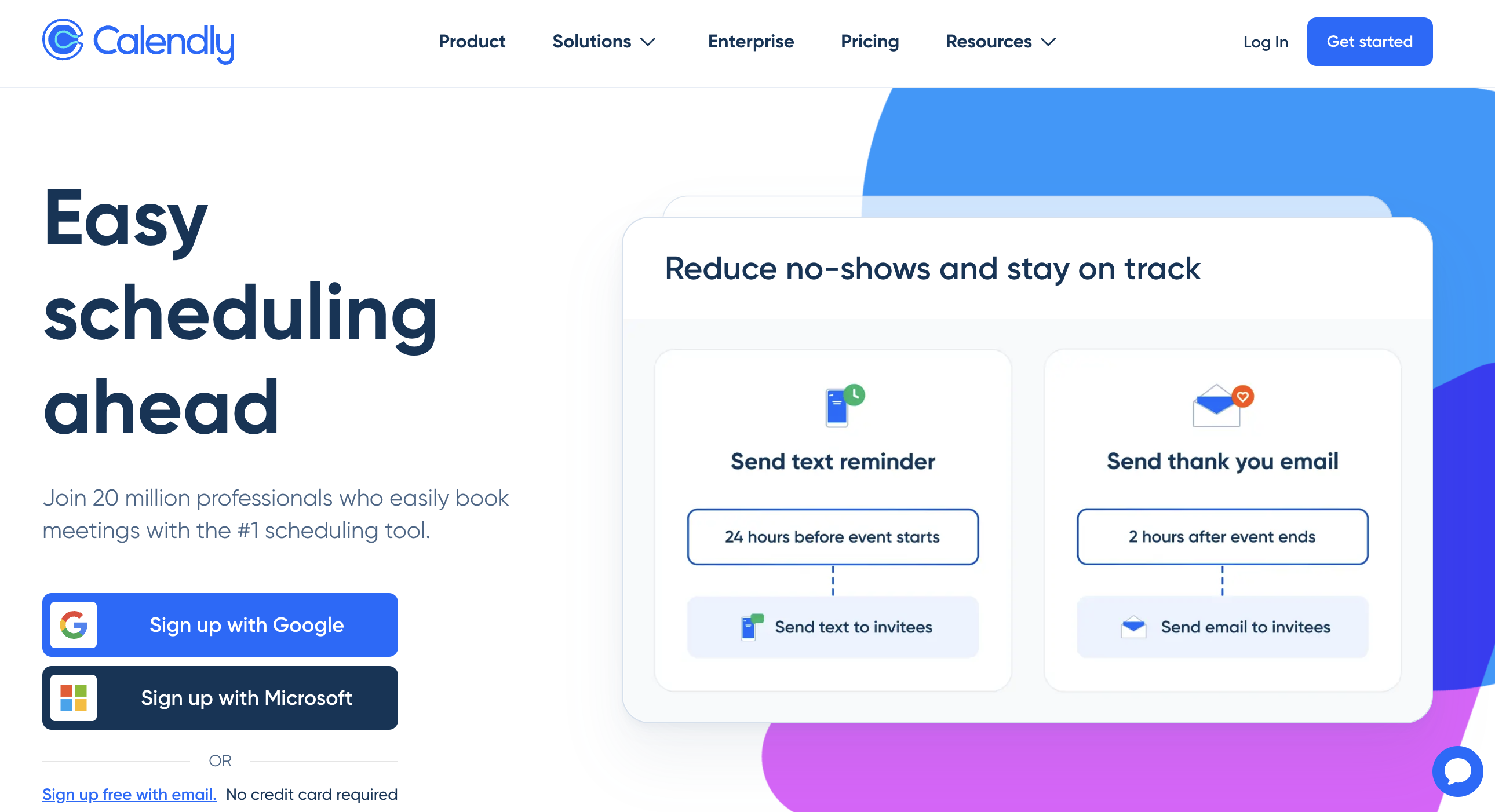
Sales call scheduling can be a nightmare, especially when working with prospects in different US time zones. That’s exactly what inspired Tope Awotona to create Calendly in 2013 and save everyone the headache of endless back-and-forth.
Calendly's best features include workflow automation, 150+ native integrations, and the ability to remove Calendly branding from scheduling pages to make them look professional.
However, the scheduling software has a modular workflow, meaning it may be awkward to set up and use for individuals and small teams (but very useful for large ones).
Some other Calendly features include:
- Create multiple scheduling links for different appointment slots, types, and durations.
- Streamline meetings with automatic time zone detection, round-robin scheduling, and reminders.
-
Two-way sync with Google and Outlook Calendar.
Given Calendly’s range of impressive features and pricing, it’s a good option for large enterprises that rely heavily on scheduling and have a good budget.
Pros |
Cons |
|
|
Calendly pricing
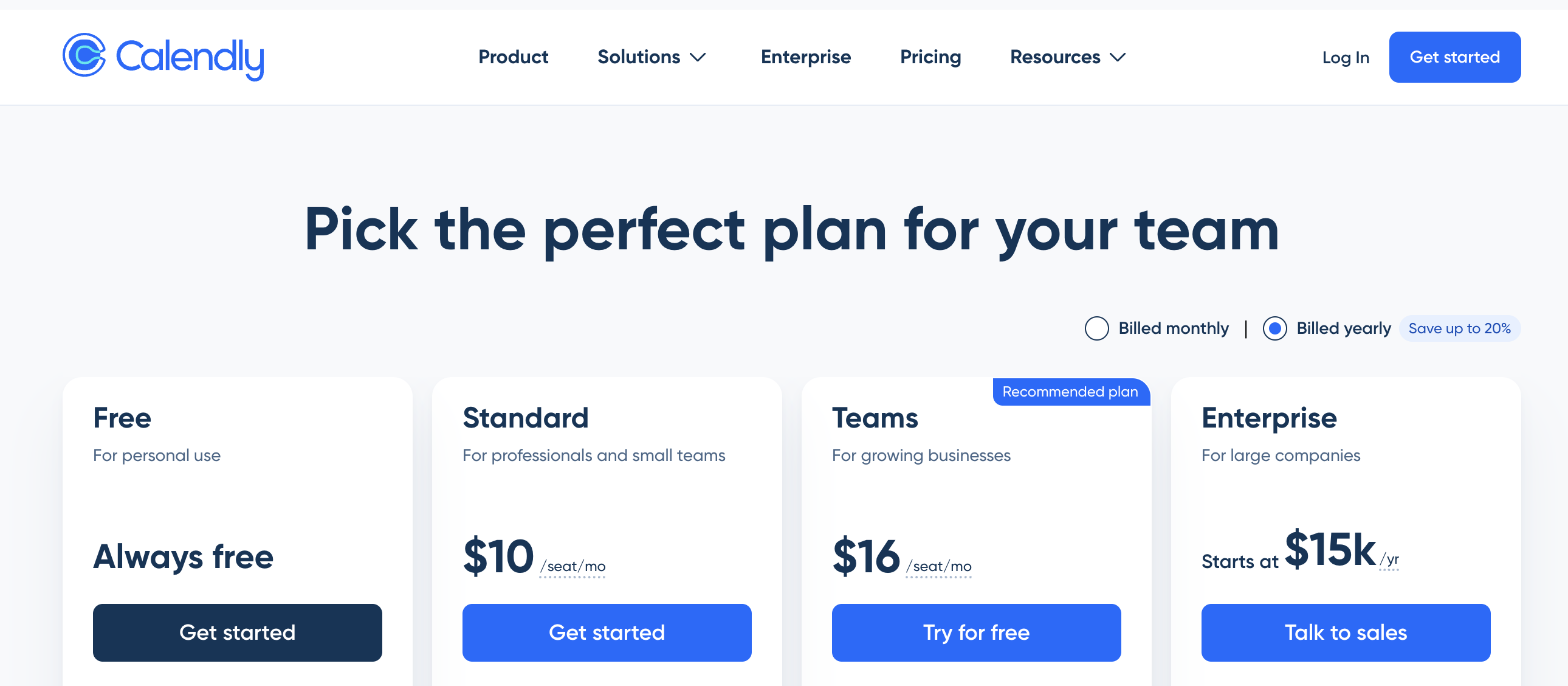
Calendly has a free plan plus three paid options, with each tier unlocking more features. They recommend the Teams plan, which costs $16/month when billed annually. That recommendation tracks—Calendly is built with bigger teams in mind, so it makes sense they'd point you there!
You can test Calendly out with a 14-day free trial.
Use Calendly if:
- You're looking to build automated workflows for scheduling meetings across many different departments/teams.
- You want to integrate enterprise tools like Okta.
- Your team requires advanced security and booking controls, and budget is not a constraint.
If you're feeling conflicted on which scheduling software to choose, check out our in-depth analysis of Calendly vs. YouCanBookMe.
SimplyBook.me overview
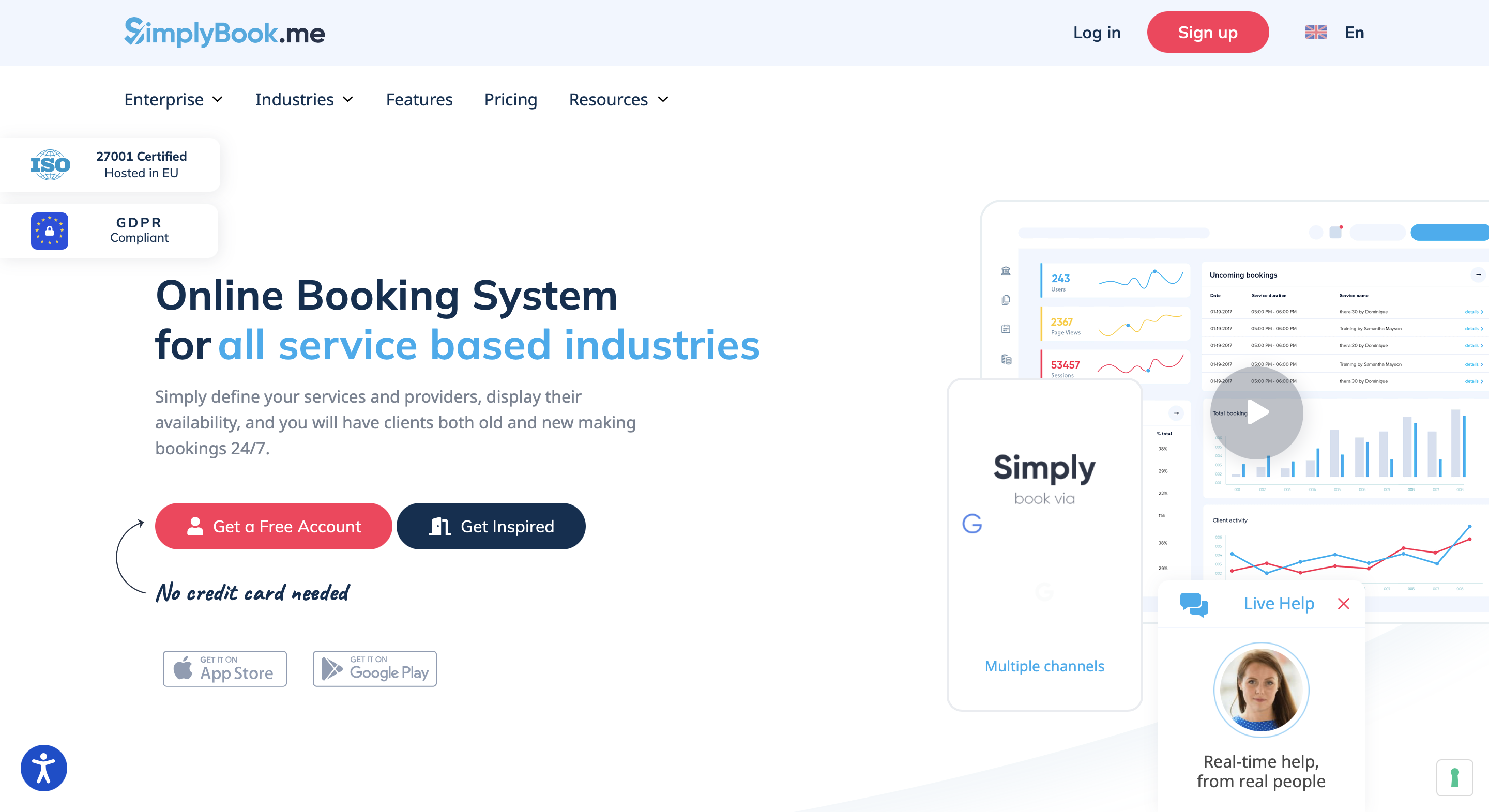
SimplyBook.me was founded by Ingvar Gudmundsson in 2011 to create an online booking system for service-based enterprises like health organizations. The tool has specific pricing plans for businesses operating from a single location, making it ideal for small or individual establishments.
SimplyBook.me offers customizable intake forms, resource management, appointment tracking for clients, report generation, and mobile app access for on-the-go appointment management, all while keeping your accounting on track.
Some of its top features include:
- Ticket generation for medical testing
- Personalized, brand-specific booking pages
with pre built templates
- Multi-language support for booking pages and emails
- Built-in CRM system to manage customer information and track booking history
- Works with many international payment gateways, including Stripe, PayPal, Square, Alipay, Worldpay, Mollie, and PaySafeCard
This makes SimplyBook.me an excellent scheduling software for healthcare enterprises and medical offices—especially those looking to streamline their appointment processes and reduce the constant back-and-forth between patients and providers.
Pros |
Cons |
|
|
SimplyBook.me pricing
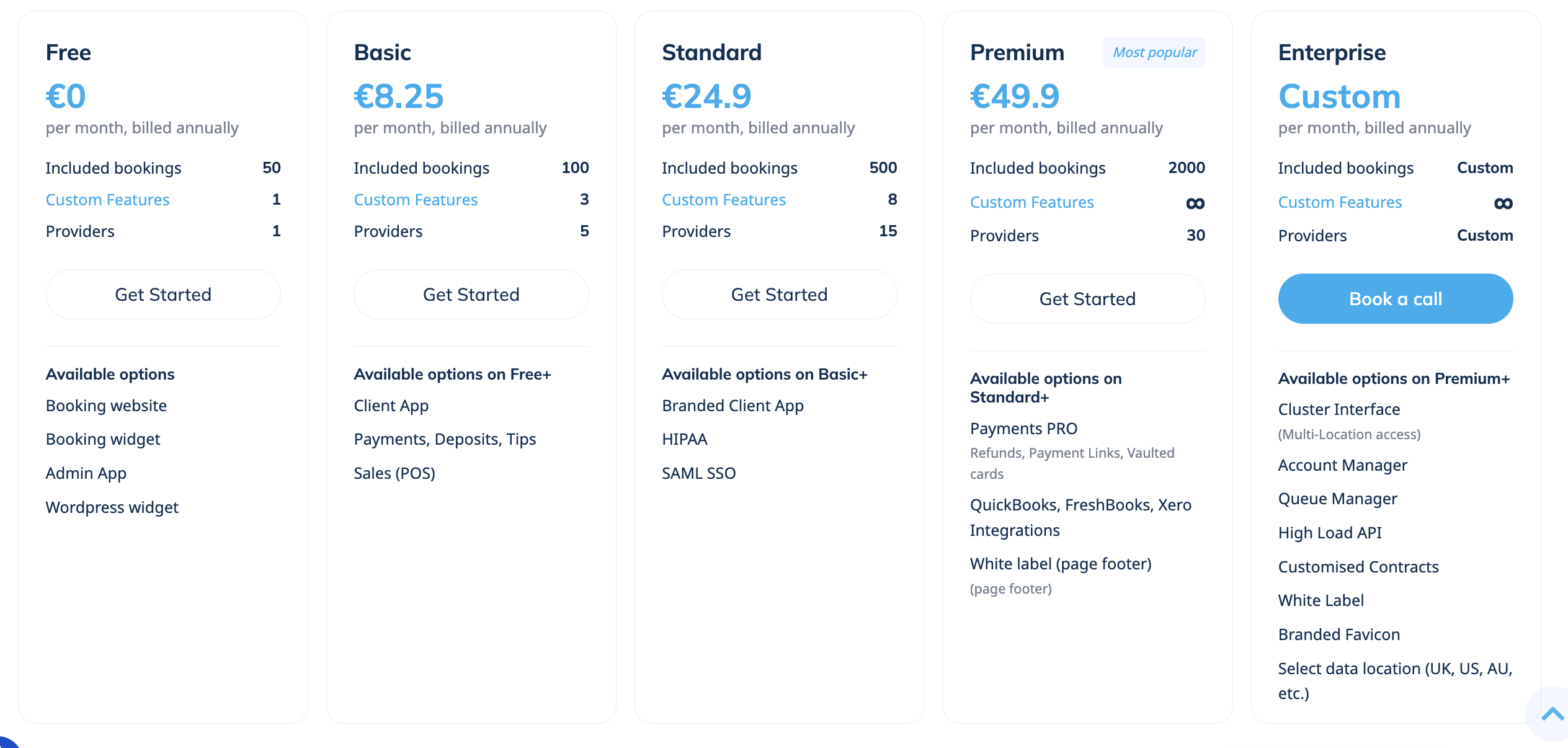
Compared to other automated scheduling apps, SimplyBook.me has a pretty complicated pricing structure. Most of its best features are considered “custom features,” and unless you’re on the highest-tier plan, you’re limited to using between 1 to 8 of them.
Keep in mind that all plans, including Premium, come with a cap on the number of bookings you can make.
To try the tool out, you can opt for a free 14-day trial that includes most features and 50 bookings.
Use SimplyBook.me if:
- You need to streamline the patient booking process for your medical enterprise and are willing to pay a bit more to do so.
- You handle sensitive patient data and need a scheduling tool that’s HIPAA-compliant.
- You want to save time by using one tool to keep track of scheduling, accounting, patient information, and resource management.
Get unlimited bookings and features
Claim access to all scheduling features and get unlimited bookings for only $14.40/month with YouCanBookMe.

.png?width=977&height=916&name=patient%20scheduling%20software%20(1).png)
Square Appointments overview
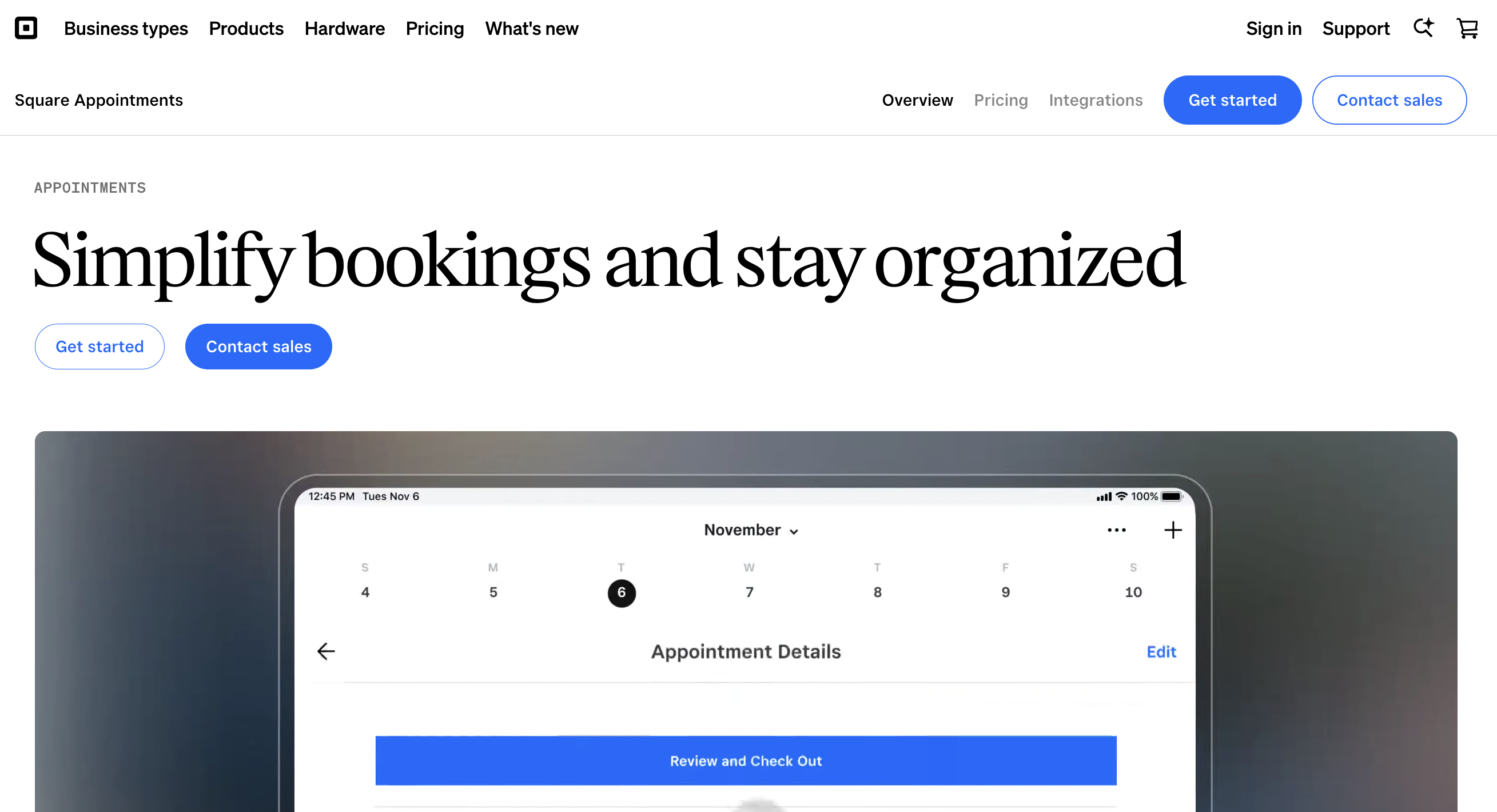
Launched by Twitter’s co-founder Jack Dorsey in 2014, Square Appointments is a service scheduling app aimed at businesses like hair salons, personal trainers, and spas.
Some of its features include:
- Free invoice generation capabilities
- An AI assistant that handles customer queries
-
On-the-go access through the Square Appointments mobile app
- Automated appointment reminders via text message or email
- A customer directory that helps you track client satisfaction and feedback
- Integrated payment processing with Square, Visa, Mastercard, and Discover
-
Integration with POS hardware for seamless in-person payments
- Client management tools, such as tracking customer history, importing existing customer data, and auto-creating customer profiles using customer notes
All these features make Square Appointments handy for service-based businesses looking for an all-in-one solution for scheduling, payments, and customer management.
Pros |
Cons |
|
|
Square Appointments pricing
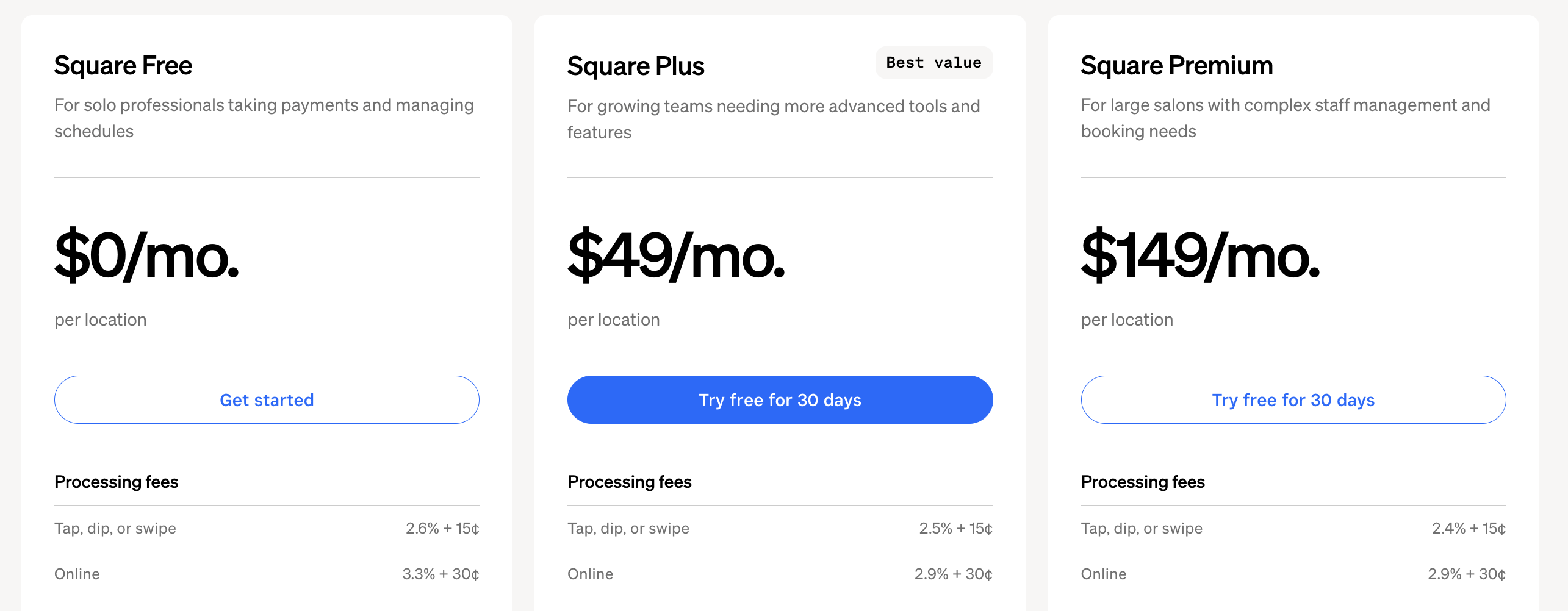
Square Appointment pricing is location-dependent, meaning you’ll have to sign up for at least the Plus plan if your business operates from multiple locations. It also charges processing fees on all transactions made through the app.
Square offers a generous 30 day free trial as well as a free plan.
Use Square Appointments if:
- You’re looking for an all-in-one scheduling, customer management, and payment solution.
- You want to keep an eye on stock counts when making appointments.
- You're already using Square POS tech.
Doodle overview
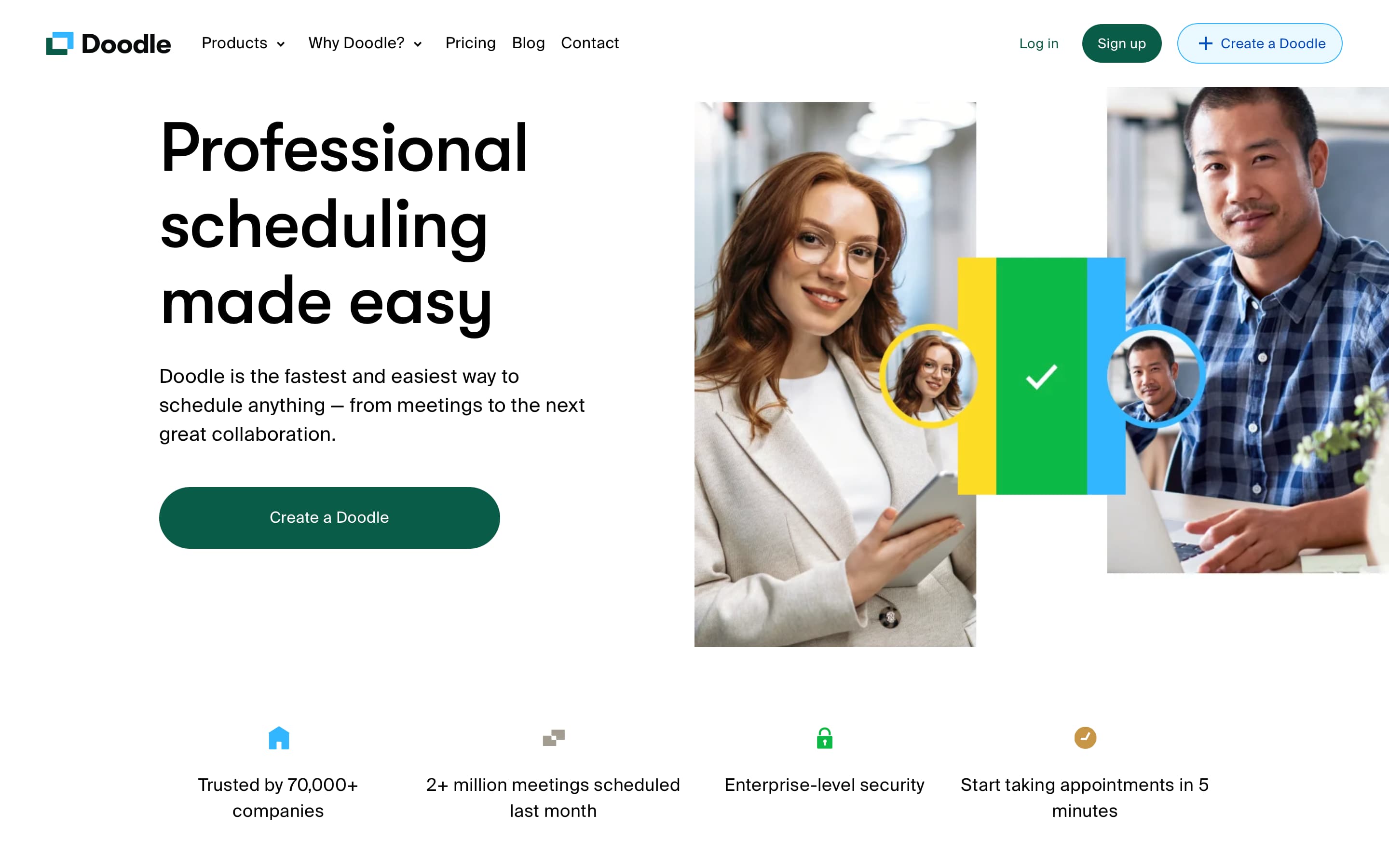
Frustrated with his inability to coordinate schedules with his colleagues and clients, Michael Naf launched Doodle in 2007 to make booking appointments with clients easier. Within three years, Doodle was a go-to scheduling solution for over six million users.
Doodle enables you to:
- Meet on Google Meet and Zoom via native integrations
- Easily set up meeting polls to find a date and meeting time
- Use the admin console to book appointments on behalf of clients and ensure collaboration across the board
- Calendar syncing with Google, Microsoft Office 365, Outlook Add-in, and Microsoft Exchange
-
Seamlessly add new meetings to users' calendars, streamlining the booking process and preventing scheduling conflicts
With its focus on group meeting polls, Doodle is the best scheduling tool for teams that are always struggling to find a suitable time for internal meetings.
Pros |
Cons |
|
|
Doodle pricing
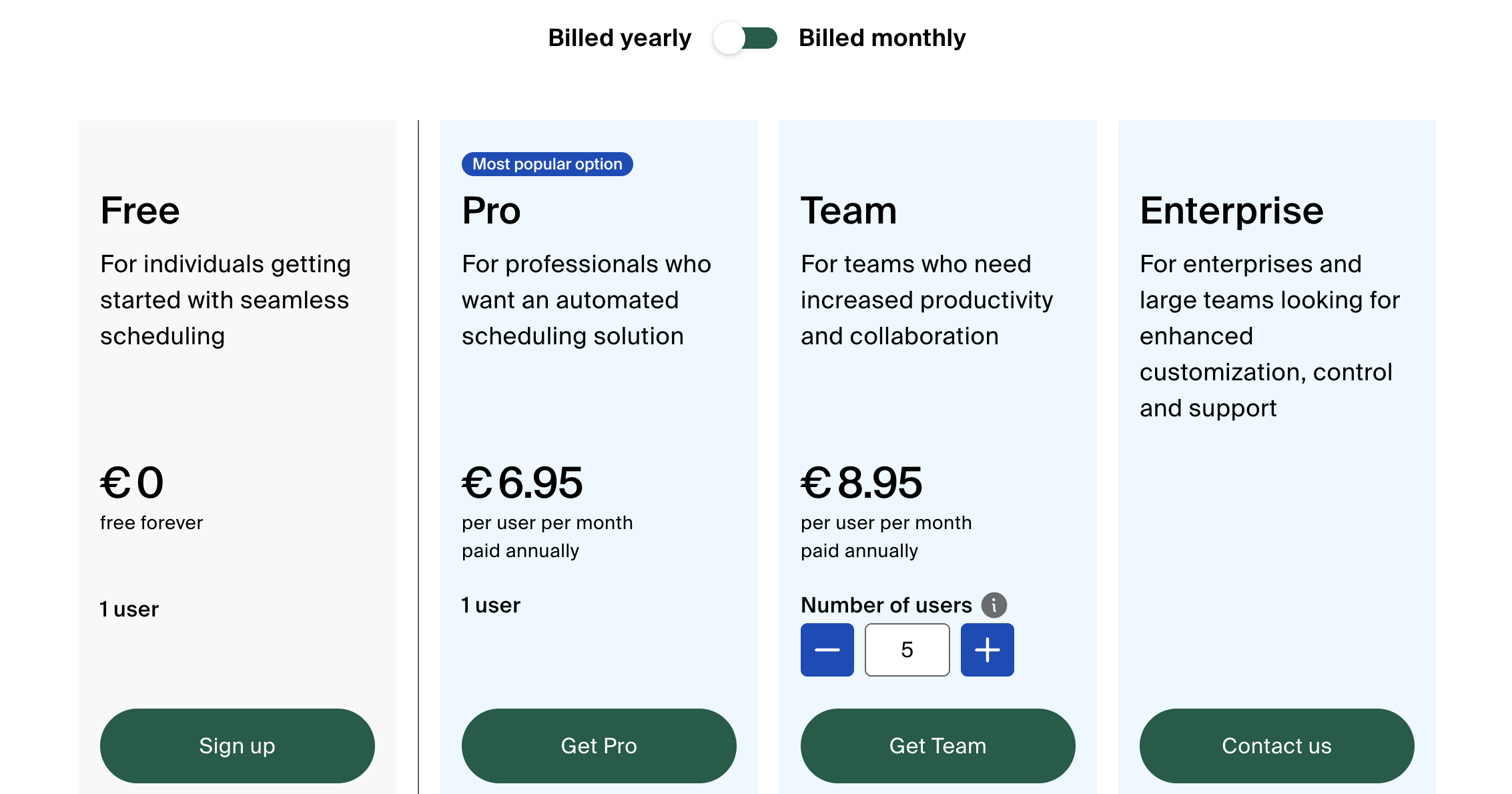
Doodle offers a free plan with unlimited group polls, but it includes ads for both you and your bookers, which can make the experience feel less professional. Paid plans remove ads and start at €6.95 per user per month.
Like the majority of meeting schedulers, Doodle offers a 14-day trial.
Use Doodle if:
- You need an easy way to enable multiple people to co-host events.
- You regularly schedule recurring group meetings with your team or clients.
- Your team members live in different time zones and can benefit from automatic time-zone adjustment.
Easily schedule internal and external meetings
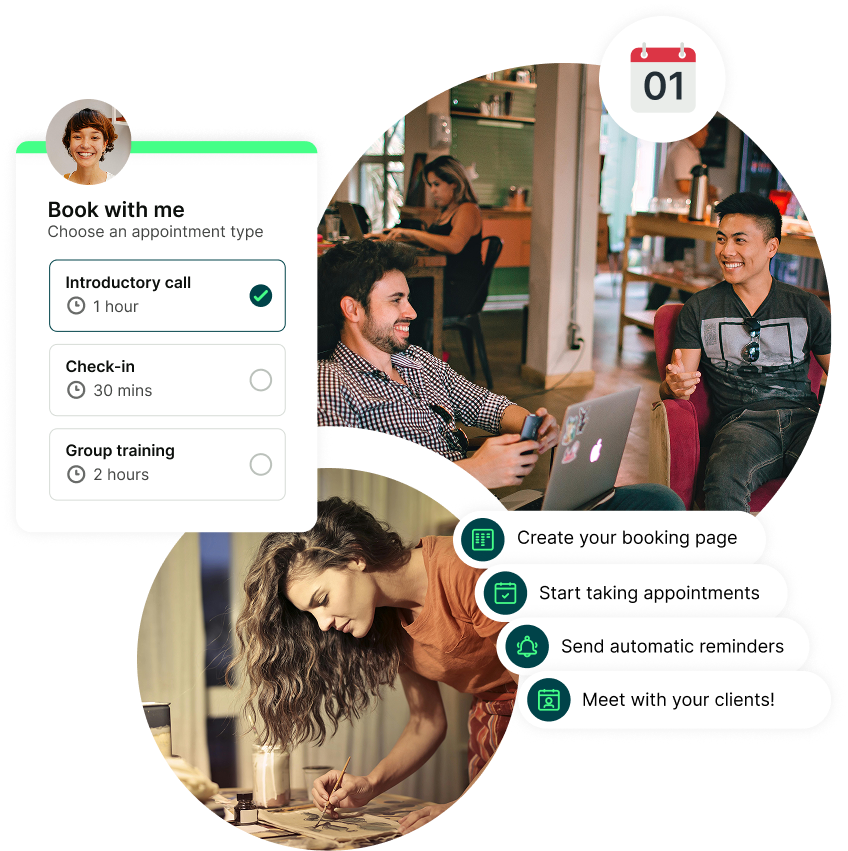
Set up and manage the exact types of meetings you need—whether it's paid consultations, team check-ins, or client onboarding calls.
OnceHub overview
Founded in 2006, OnceHub was created by Rami and Gilad Goraly to simplify scheduling and enable businesses to optimize their sales efforts.
Some of its features include:
- Qualifies, routes, and connects leads in real-time using chatbots, live chats, and instant meetings
- Intelligent voice automation that lets people book appointments by phone
- Workflow builder to create forms and chatbots
- Advanced reporting to refine the sales process
- White-label branding to personalize the booking experience
- Integration with CRM systems like Salesforce and HubSpot
- Chatbots to ask screening questions, answer FAQs, and gather contact details
Given its focus on optimizing and capturing leads, OnceHub's scheduling software is a strong option for B2B, e-commerce, and service-based businesses that want to qualify prospects before meeting with them.
Pros |
Cons |
|
|
OnceHub pricing
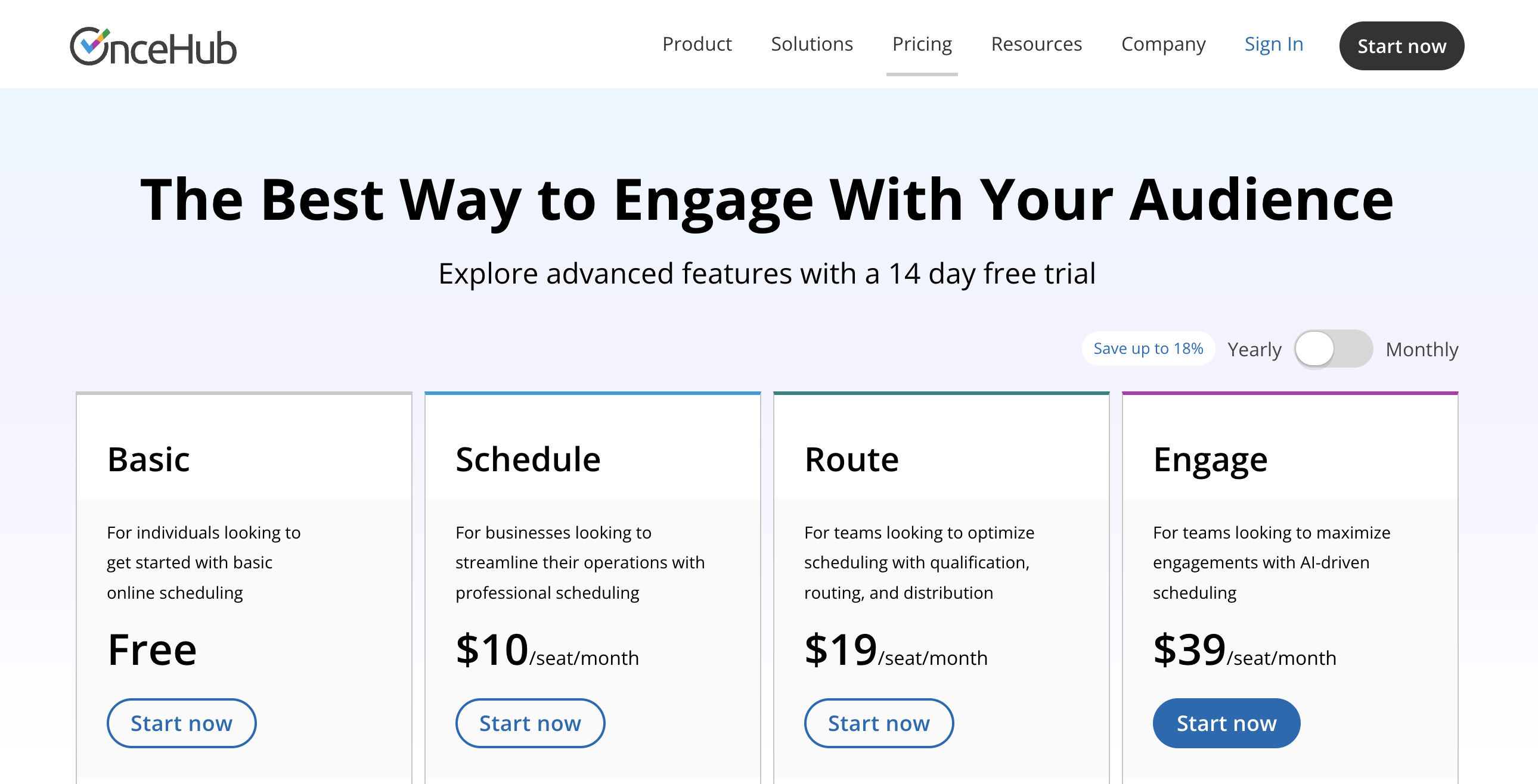
OnceHub offers a free appointment scheduling plan and three paid plans, each charging a monthly fee per user.
If you're looking to use OnceHub for lead routing, you'll need to choose the Route plan at $19/seat/month. If you're interested in the conversational chatbot, the Engage plan for $39/seat/month will be the plan for you.
You can take OnceHub for a spin with a free, 14-day trial.
Use OnceHub if:
- You’re looking to automate scheduling, lead qualification, and customer engagement at once.
- You want to natively integrate scheduling with your CRM systems.
- You need advanced reporting to gain insights into your sales process and optimize performance.
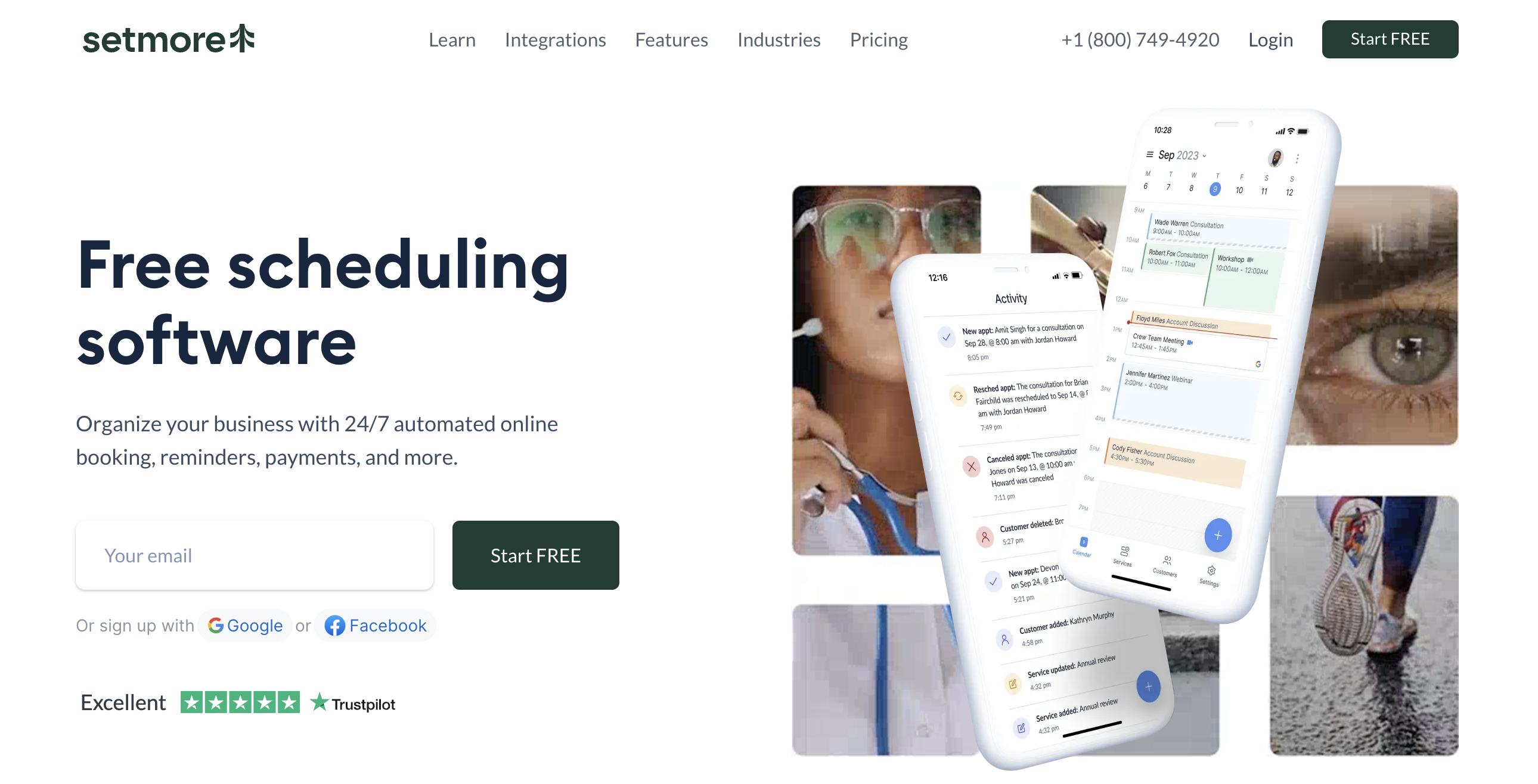
Setmore overview
Founded in 2011, Setmore was created with a simple goal: to provide an elegant and user-friendly solution for booking and scheduling appointments.
Some of its features include:
- One-click appointment bookings
- Customer review streaming on scheduling pages
- Automatic confirmation, reminders, and appointment follow-ups
- Integrates with payment gateways such as Stripe, PayPal, and Square
- Calendar syncing with Google and Office 365 across multiple devices
- Appointment booking via social media, content management systems, and CRM software
-
Native integrations with tools like Squarespace, Shopify, Zoom, QuickBooks, and Gmail, as well as 30+ other work apps
These features make Setmore useful for solo business owners, coaches, educators, and customer-facing businesses looking for an easy-to-use, customizable online scheduling tool to manage their appointments and classes.
Pros |
Cons |
|
|
Setmore pricing
While Setmore’s free plan offers some premium features, you’re limited to 200 appointments per month and don't have access to two-way calendar sync, which might cause scheduling conflicts.
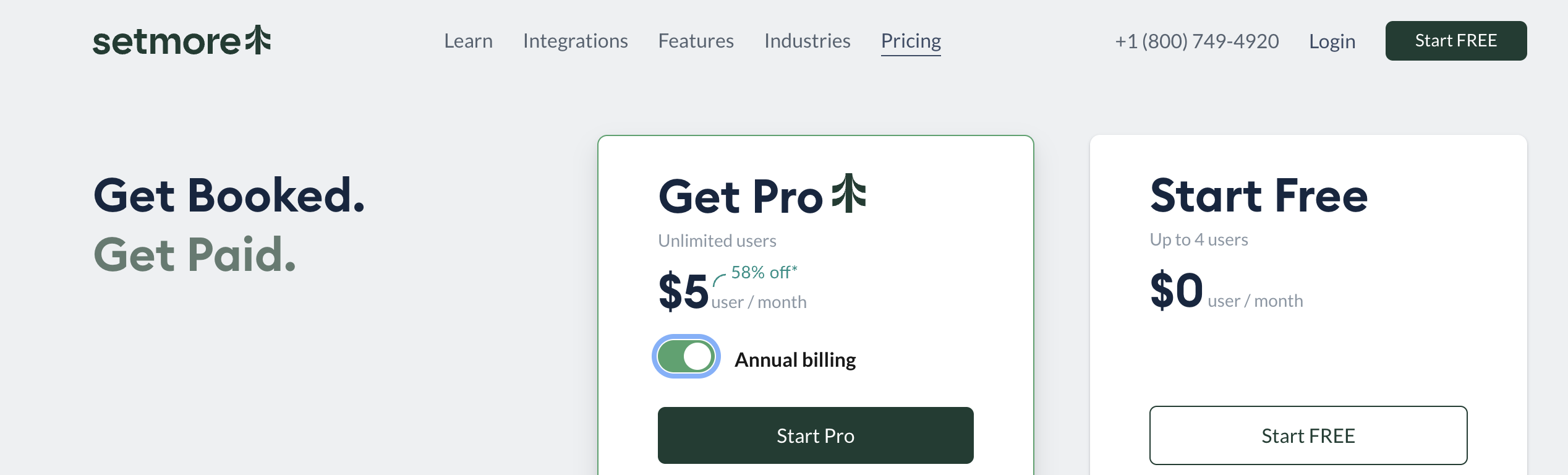
Paid plans cost $5/user per month when billed annually.
Unlike most Setmore alternatives, this tool doesn't offer a free trial.
Use Setmore if:
-
You're looking to automate and simplify scheduling but have budget constraints.
- You offer classes, webinars, and training sessions and need a tool that supports recurring appointments and group bookings.
- You work with clients in different time zones and want to offer them the ability to self-schedule at convenient times.
Google Calendar overview
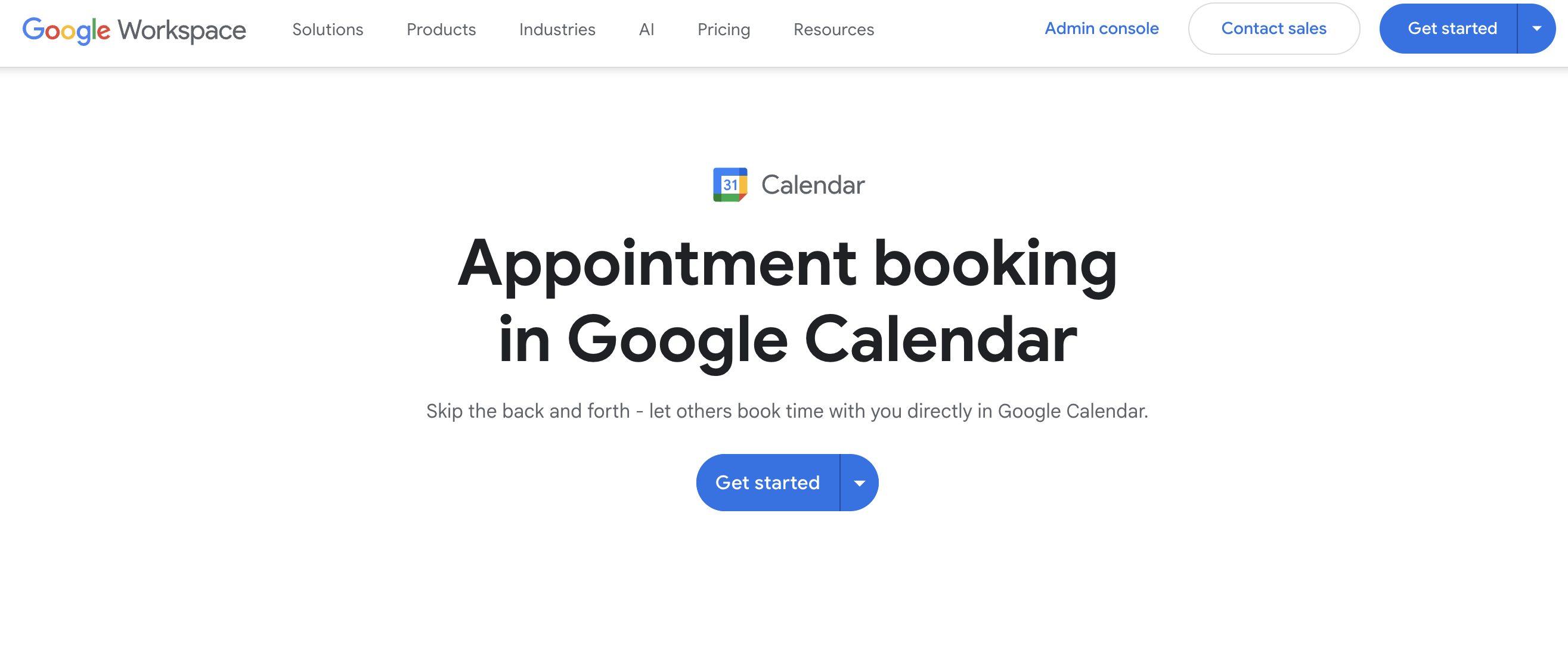
Google Calendar was launched in 2006 to make it easy for Google users to manage their schedules and keep track of important meetings. Google Appointment Scheduling was introduced more recently in 2022 within the Google Workspace.
Some of its features include:
- Seamless integration with other apps within Google, such as Gmail, Google Meet, and Google Drive
- Ability to create multiple calendars and share them with others
- Easy-to-use, intuitive interface with drag-and-drop functionality
- Different appointment types
- Automatic email reminders
- Option to take payments for bookings
Since Google Calendar works so well with other services in Google, it’s best for people who want to schedule while staying within the Google ecosystem.
Pros |
Cons |
|
|
Google Calendar pricing
A limited version of Google Appointment Scheduler is included in all Google Calendars, letting you create a single booking page with one appointment type.
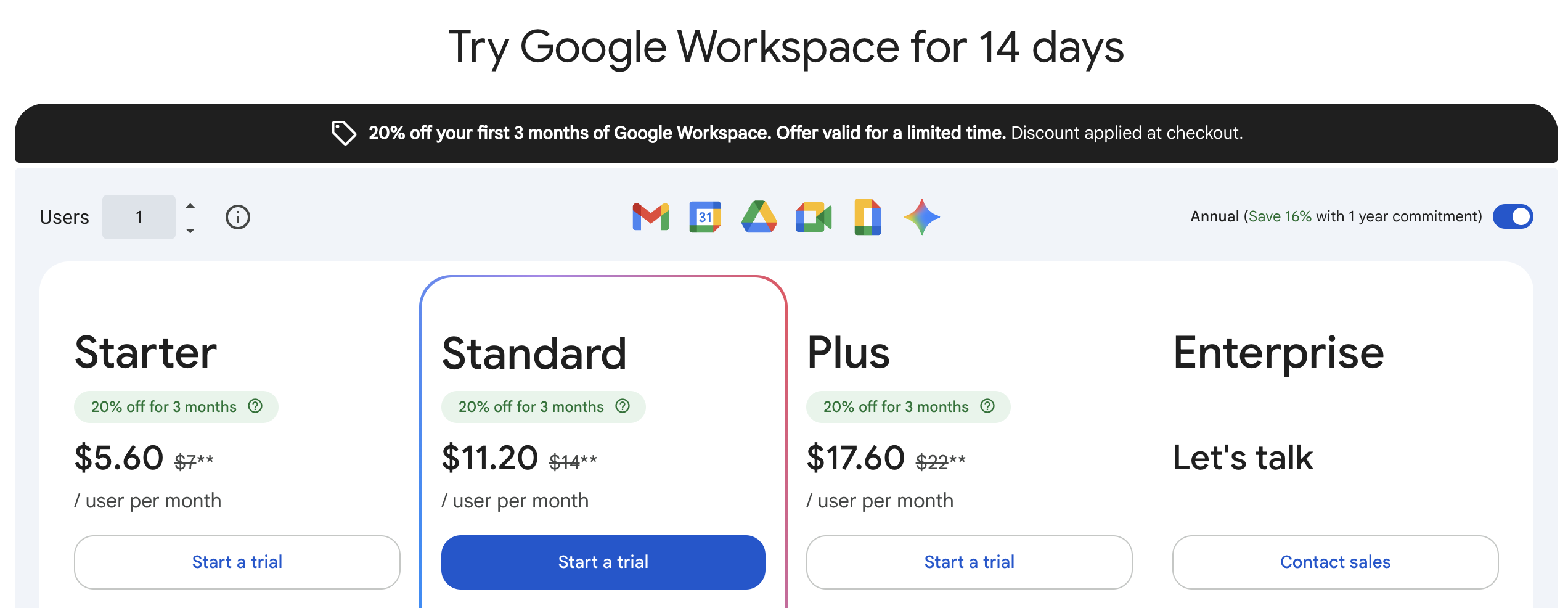
If you're looking for access to more features, you'll need to opt for a paid Google Workspace account, which starts at $6/user/month when paid annually.
Use Google Calendar if:
- You rely heavily on Google services like Gmail and Google Drive for your daily workflow.
- You need to integrate multiple Google Calendars from different sources, such as work and personal calendars, into one master calendar.
- You need a basic booking tool and can do without high-level features or robust integrations.
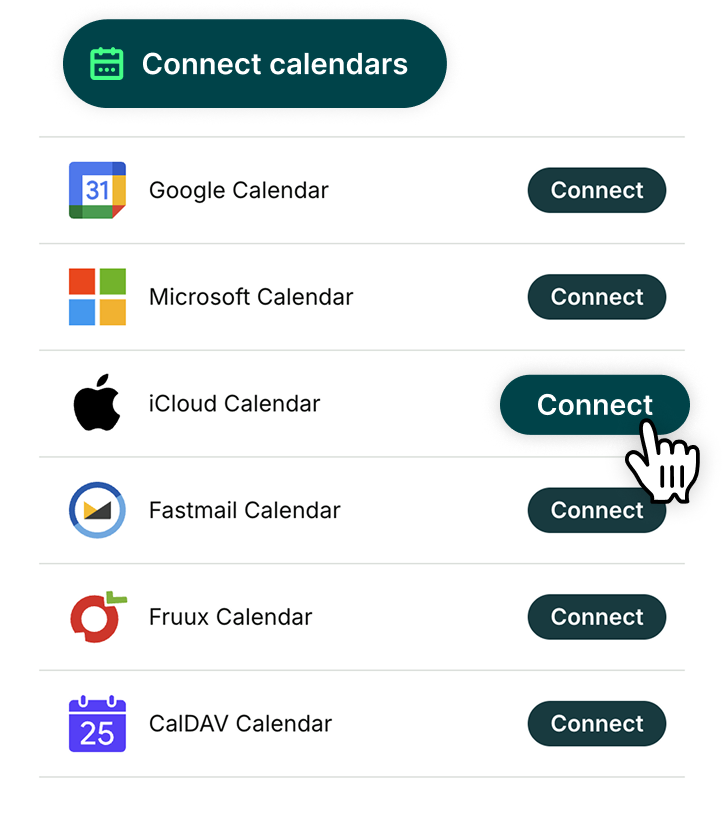
Sync up to 10 calendars with YCBM
Whether Google Calendar, Microsoft, Apple or Fastmail, sync all your calendars with YouCanBookMe to easily combine all parts of your schedule.
Clockwise overview
Founded in 2016 by Gary Lerhaupt and Matt Martin, Clockwise is built on the belief that time is our most precious resource. It is a scheduling AI assistant that helps you manage your time better, so you can focus on what matters most on your to do list.
Some of Clockwise's noteworthy features include:
- Calendar AI features that block off time for focused work and lunch breaks
- Automatic meeting resheduling to optimize your (and other participants’) schedules
- Insights and analytics on how you're spending your time
- Integration with Google Calendar, Microsoft Outlook, Slack, Zoom, and Asana
-
Ability to manage your task list and adjust schedules based on the task's priority
These features make Clockwise ideal for professionals and teams looking to create more time for uninterrupted work, optimize their productivity, and coordinate seamlessly between multiple schedules.
That being said, if you need scheduling software for business, i.e. for booking external meetings with clients, Clockwise will fall short. The app lacks key features like online payments for meetings, customizable booking pages, intake forms, buffer times, or automatic time zone adjustments.
Pros |
Cons |
|
|
Clockwise pricing
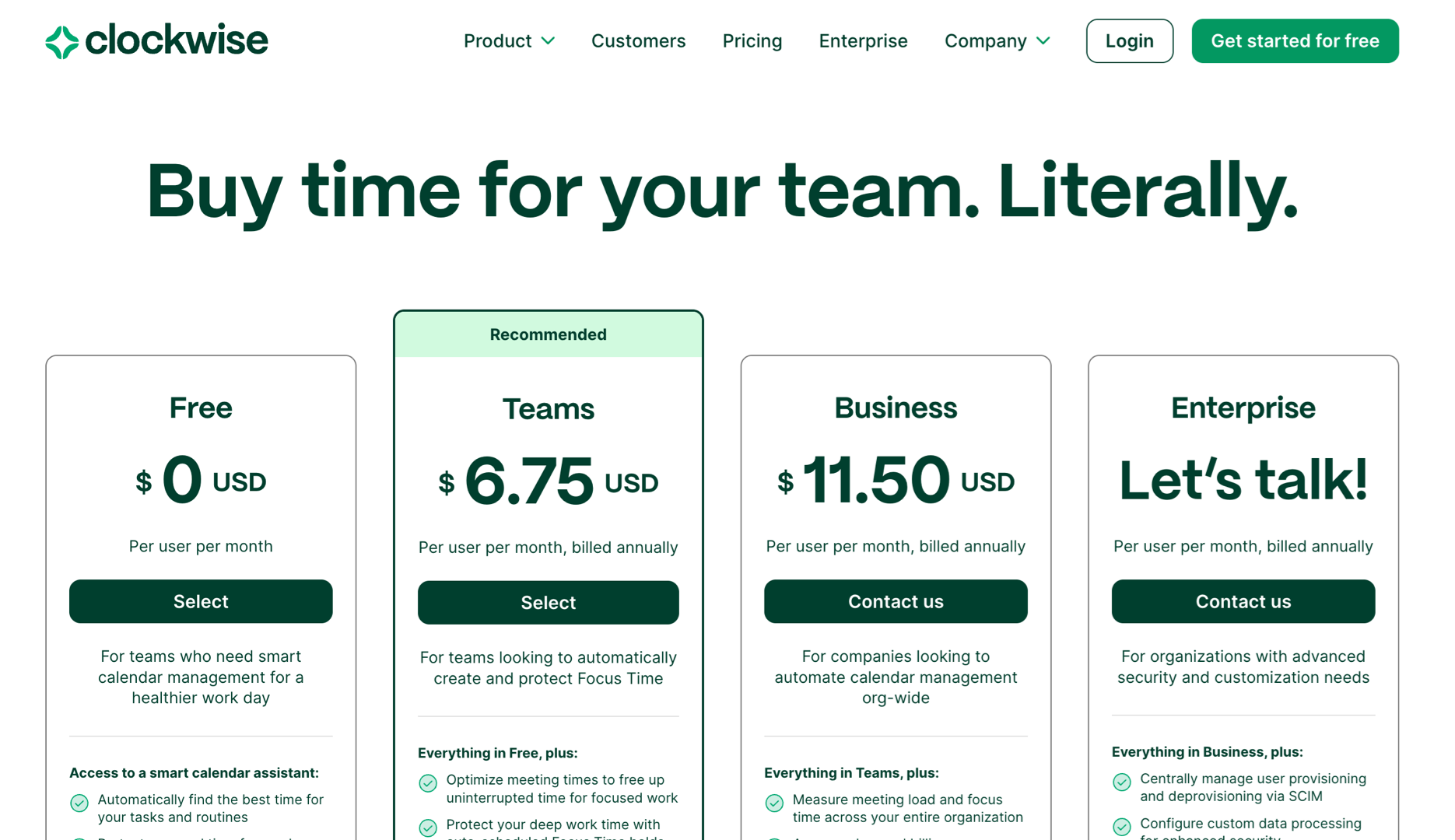
With paid plans starting at $6.75/user per month (billed annually), Clockwise is one of the most affordable scheduling tools on this list. However, if you’re looking for advanced calendar controls and access to at-a-glance analytics, you’ll need to subscribe to high-tier plans.
Clockwise also offers a pretty handy free plan and a generous 30-day free trial.
Use Clockwise if:
- You're looking for a scheduling tool that prioritizes focus time by blocking off your calendar and minimizing meeting disruptions.
- You want to optimize your full schedule and to do list with automatic rescheduling and time-saving AI features.
- You want detailed insights and analytics on how to improve your productivity.
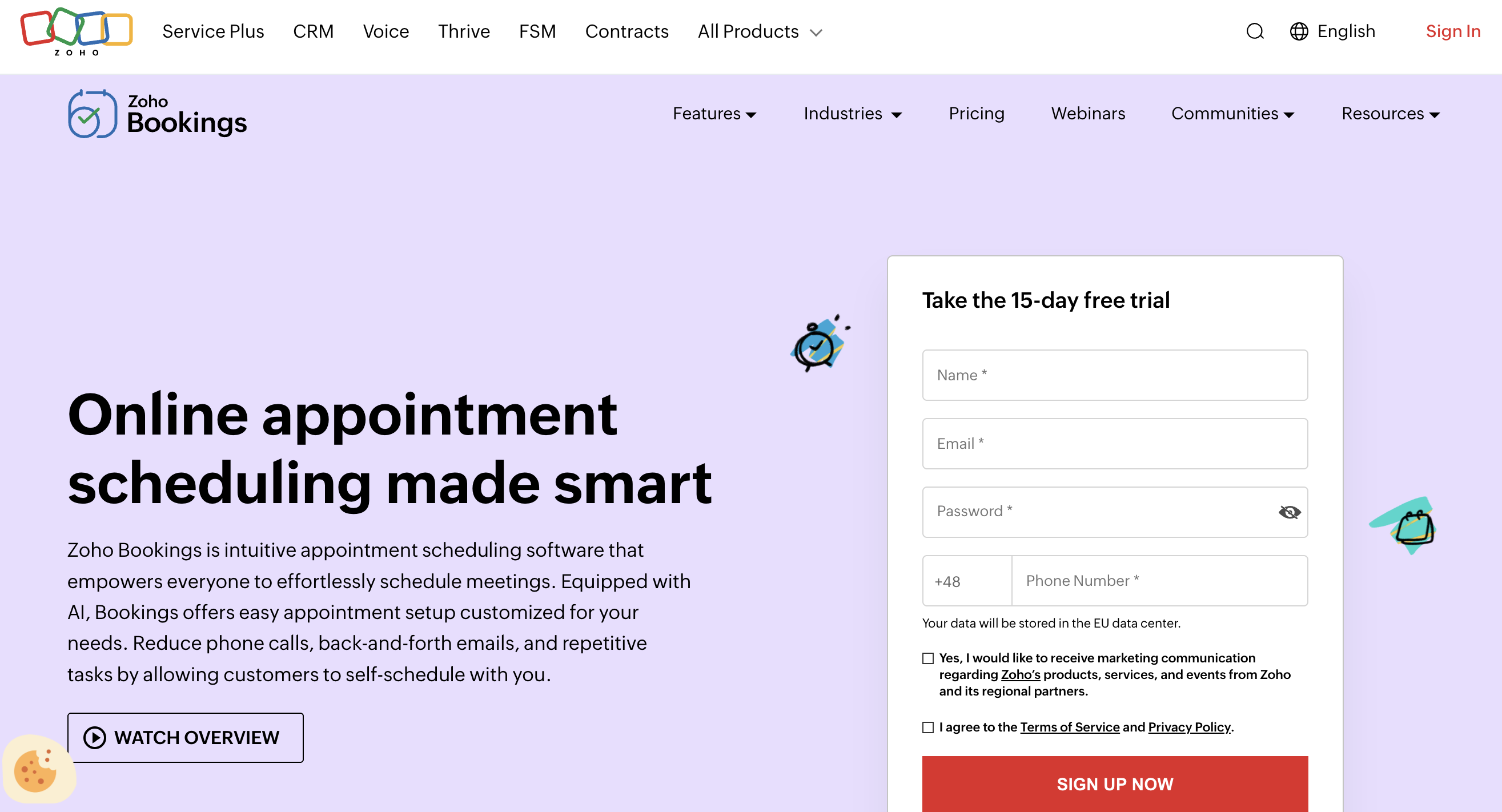
Zoho Bookings overview
While Zoho as a whole was founded in 1996, its dedicated scheduler app, Zoho Bookings, has only been around since 2019.
Zoho Bookings is designed to connect your appointments directly to customer records, staff schedules, and internal workflows across Zoho apps. If you’re already using tools like Zoho CRM, Zoho Desk, or Zoho Calendar, Zoho Bookings can slot neatly into your existing setup—helping you manage client appointments while keeping customer data and team availability in sync.
Some of Zoho Bookings' key features include:
- Client-facing booking pages with real-time availability
- Staff and resource scheduling with online payments
- Integrations with three calendars: Zoho, Google, and Outlook
- Native sync with Zoho CRM, Meeting, and Desk
- Automated email and SMS confirmations and reminders
- Basic reporting on appointments and staff utilization
Although you can use Zoho Bookings as a standalone scheduler, it's features are pretty lightweight compared to other tools, so it works best as part of the larger Zoho suite.
Pros |
Cons |
|
|
Zoho Bookings pricing
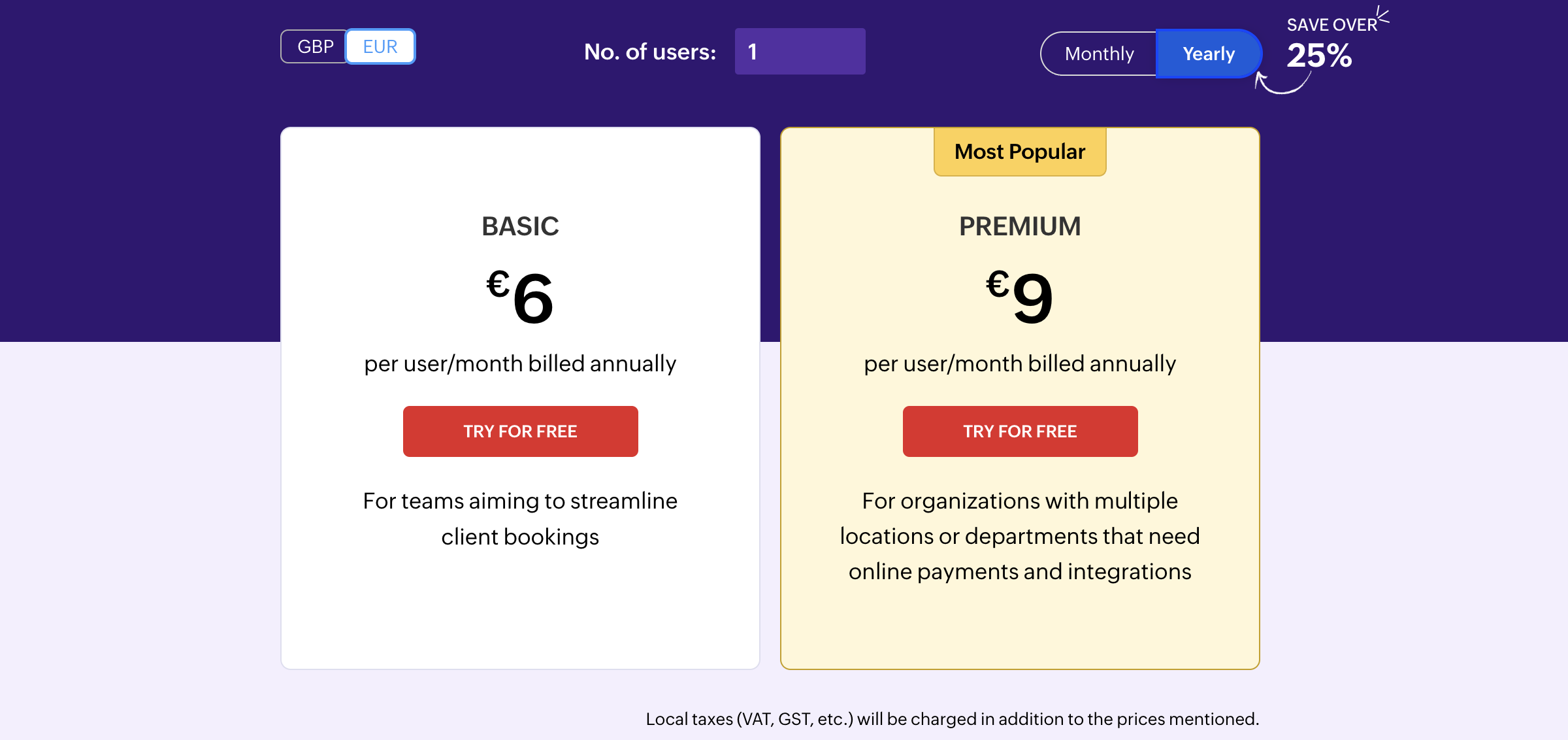
Zoho Bookings offers a free scheduling app and two paid plans: Basic for €6/user/month and Premium for €9/user/month when billed annually.
If you want to take advantage of the resource booking feature, you'll have to opt for the Premium plan and add resources for an additional €12/month.
You can test the tool out with a free 15-day trial.
Use Zoho Bookings if:
- You're already using Zoho's other tools, and would like to stay in the same ecosystem.
- You need both resource and staff booking for your business.
- You don't need a heavyweight online scheduler.
Connecteam overview
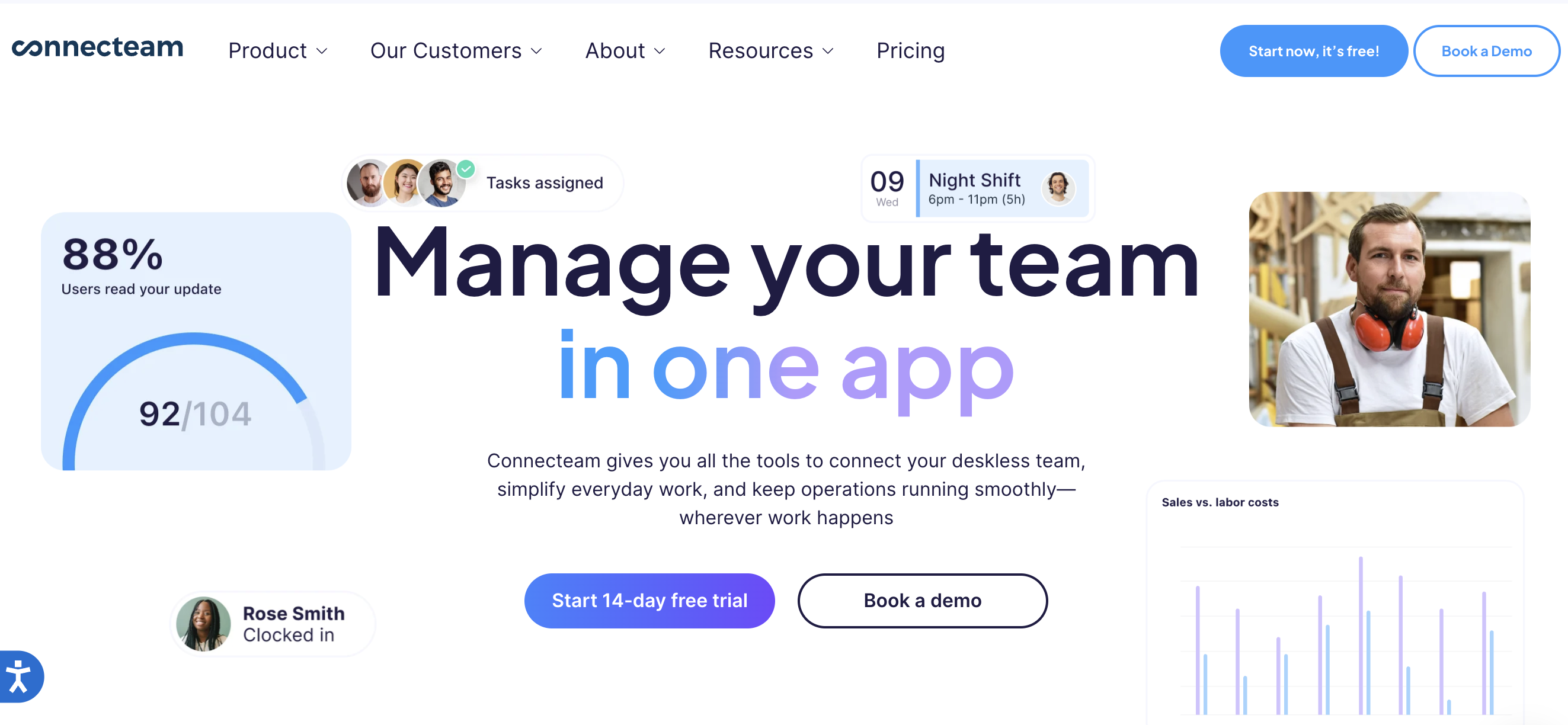
Connecteam was founded in 2016, and not as a traditional scheduling app, but as an employee management platform that includes scheduling as part of a much broader toolkit.
Instead of helping customers book appointments, Connecteam focuses on internal workforce scheduling, making it ideal for businesses with shift-based or frontline teams.
Some of Connecteam's core features are:
- Employee shift scheduling and availability management, complete with time-off requests and time-sheet approvals
- Time tracking and attendance monitoring
- Built-in team chat and announcements
- Task lists, checklists, and online courses for teams
- Mobile-first experience for on-the-go workers
Because of this focus, Connecteam excels at internal coordination—but it’s not built for client-facing bookings or external meeting scheduling.
Pros |
Cons |
|
|
Connecteam pricing
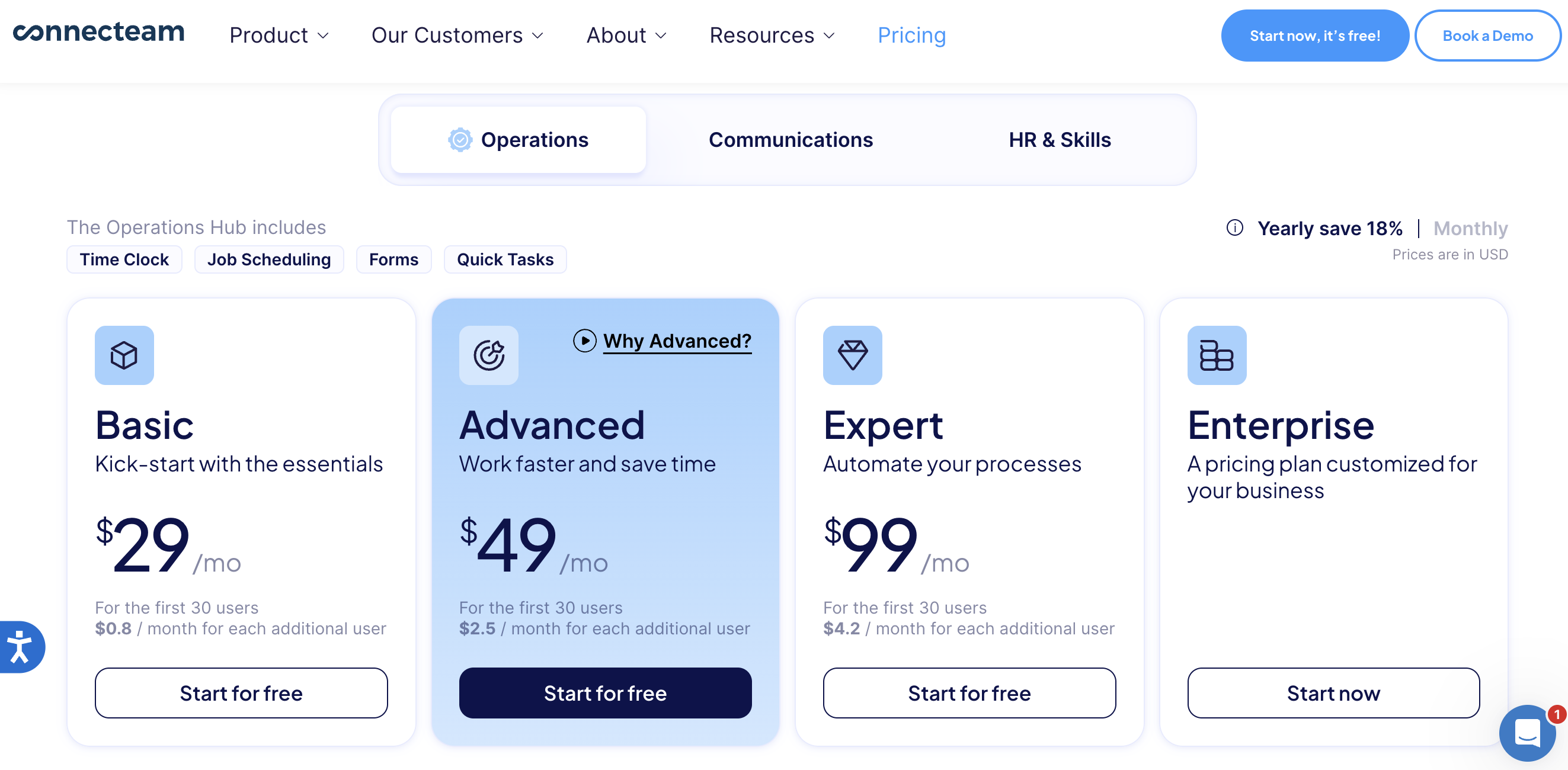
For employee scheduling, you'll want to choose one of the plans within the Operations Hub, which start at $29/month for the first 30 users when billed annually.
Connecteam also offers a free plan for up to 10 users and a free, 14-day trial of its paid plans.
Use Connecteam if:
-
You manage shift-based or frontline employees.
-
Internal scheduling, communication, and time tracking matter more than client bookings.
-
Your team needs a mobile-first workforce management solution.
The final verdict
So, which is the best online scheduling app of 2026? Well, each tool we’ve discussed above is “the best” for its intended use case.
Keep in mind that you can always take advantage of free trials and test all of them to figure out which one suits you best!
But based on my experience, here’s what I recommend:
- Booking clients or customers? If scheduling is part of your customer experience, look for branded booking pages, automated reminders, and flexible availability rules.
- YouCanBookMe—Deep customization, automation, and multilingual, multi-time-zone bookings for individuals and teams
- Calendly—For enterprise teams that need extensive native integrations
- Already deep in a specific ecosystem? If your workflows already live inside a larger platform, you’ll get the most value from tools that integrate natively.
- Google Calendar—Ideal for teams working entirely in Google Workspace
- HubSpot Meeting Scheduler—A natural fit for sales teams using HubSpot
- Zoho Bookings—Best for organizations that rely on Zoho apps
- Square Appointments—Great for businesses that use Square's POS
- Optimizing internal time and productivity? If your goal is fewer interruptions and better use of team time, internal scheduling tools are a better fit than booking pages.
- Clockwise—Protects focus time and automatically organizes meeting-heavy calendars
- Connecteam—Built for shift-based teams and internal workforce scheduling
FAQs
What's the difference between free and paid scheduling apps?

Free scheduling apps typically offer basic features like simple booking links and calendar integration, but they often come with limitations such as:
- Restricted number of scheduling links or appointments per month
- Limited automated reminders
- Basic customization options
- Ads or branded elements you can't remove
Paid scheduling apps usually include advanced features like:
- Unlimited bookings and scheduling links
- Custom branding and extensive customization
- Advanced integrations with CRMs and other business tools
- Enhanced automation and workflow capabilities
- Priority customer support
Which scheduling app is best for small businesses vs. large enterprises?
For Small Businesses:
- YouCanBookMe: Offers extensive customization, multi-language support, and affordable paid plans with pricing starting at $8.10/month (billed annually)
- Setmore: Free for up to 4 users with good basic features
- Square Appointments: Ideal for service-based businesses needing integrated payments
For Large Enterprises:
- Calendly: Built for complex workflows, advanced automation, and large teams (Teams plan at $16/month)
- OnceHub: Excellent for lead qualification and CRM integration
- HubSpot Meeting Scheduler: Perfect if already using HubSpot's sales ecosystem
Do scheduling apps work with different calendar systems?
Yes, most modern scheduling apps integrate with multiple calendar systems including:
- Google Calendar
- Microsoft Outlook/Office 365
- Apple Calendar (iCal)
- Exchange calendars
However, integration capabilities vary by app. For example, Calendly doesn't sync with Apple Calendar, while YouCanBookMe supports Apple, Google, Microsoft, and Fastmail calendars. Always check the specific integrations before choosing an app.
Can scheduling apps handle different time zones automatically?
Most professional scheduling apps include automatic time zone detection and adjustment. Key features include:
- Auto-detection: Apps like YouCanBookMe and Calendly automatically detect a visitor's time zone
- Multi-timezone display: Show available times in the booker's local time zone
- Global scheduling: Particularly useful for international businesses or remote teams
YouCanBookMe stands out by offering 44-language support and automatic regional adjustments, making it excellent for cross-border business operations.
What is the best free appointment scheduling app?
There are plenty of free scheduling apps available, but YouCanBookMe offers one of the most robust free plans. With it, you can:
-
Connect one calendar (Google, Microsoft, iCloud, or Fastmail)
-
Create a personalized booking page with your own branding and messaging
-
Embed your booking page directly on your website
-
Send automated, customizable booking confirmations from your own email address
-
Accept payments or deposits at the time of booking
-
Build a booking form with up to seven custom questions
-
Automatically detect time zones and booker language
-
Instantly generate secure video links via Zoom, Google Meet, or Microsoft Teams
-
Create single-use booking links for private sessions or one-off events
Which scheduling apps support both bookings and payments?
If you want to accept payments at the time of booking, look for scheduling tools with built-in payment integrations that support multiple payment methods, currencies, and flexible pricing options.
YouCanBookMe integrates directly with Stripe, allowing customers to pay using debit cards, credit cards, and Google and Apple Pay in 135+ currencies. You can also offer discount codes with expiration dates or minimum order values, and sell add-ons—such as materials, products, or resources—to appointments during booking. This makes it a strong option for consultants, educators, and service businesses that need flexible, international-friendly payments.
Square Appointments combines scheduling with built-in point-of-sale tools, making it useful for service-based businesses that handle both online and in-person payments through the Square ecosystem.
SimplyBook.me is a good choice for businesses that need broad international payment support. It works with multiple payment providers—including Stripe, PayPal, Square, Alipay, Worldpay, Mollie, and PaySafeCard—making it especially useful for clinics, studios, and global service providers.
Choosing the right tool depends on whether you need international payments, in-person checkout, or advanced pricing and add-on options at the time of booking.
What are the top-rated scheduling apps with calendar integration?
Most modern scheduling tools offer calendar integration, but the best ones provide real-time, two-way syncing to keep availability accurate and prevent double bookings.
Top-rated options include:
-
YouCanBookMe—Two-way sync with Google, Microsoft, Apple, and Fastmail calendars, making it a strong choice for individuals and teams using a mix of calendar providers (you can connect up to 10 calendars per user)
-
Calendly—Advanced team scheduling and integrations with Google and Microsoft calendars, but does not support Apple Calendar
-
Google Calendar—Native appointment scheduling for teams working entirely within Google Workspace
-
HubSpot Meeting Scheduler— Calendar-connected scheduling tied directly to HubSpot CRM workflows
-
Zoho Bookings—Calendar sync designed for businesses already using Zoho tools, including Zoho Calendar
The best option depends on whether you’re booking clients, coordinating a team, or working within a specific calendar ecosystem—and which calendar providers you need to support.
-min.png)
Written by
Gabriela Łaba
Gabriela is Editor-in-Chief at YouCanBookMe and a SaaS content writer with nearly a decade of experience turning complex ideas into content people actually act on — including four years deep in the world of scheduling, booking workflows, and business time management.
Get started today
Join thousands of coaches, consultants, and entrepreneurs who use YouCanBookMe to power their business. Get your first booking in a few minutes.


 4.7 / 5 — Trustpilot

