
How 8 Entrepreneurs Built Profitable Businesses Without Burning Out


Create your free booking page

What happens when you peek behind the curtain of successful small businesses? You discover that sustainable growth isn't about working harder—it's about working smarter.
I recently got to interview eight business founders across wildly different industries. From fitness coaching and family law to real estate consulting and book publishing, these entrepreneurs have cracked the code on building profitable businesses while maintaining their sanity.
Their secret? They've mastered the delicate balance between high-touch service and smart automation. Each uses online scheduling as part of a larger strategy to streamline operations without losing the personal touch that makes their businesses thrive (and yes, they’ve all been using YouCanBookMe for years!).
What emerged from our conversations wasn't just small business advice—it was a masterclass in intentional entrepreneurship. These founders have built businesses that serve their lives, not the other way around.
Forget about competing on price or flashy marketing. These eight entrepreneurs discovered something more powerful: when you build a business around your core values, you attract the right clients and avoid the wrong ones.
Lindsey Pickowicz transformed fitness coaching by rejecting the typical "no pain, no gain" mentality:
It's not just about weight loss or how many workouts you got in this week, it’s more about the idea of self-leadership."
Her business helps executives build healthy lifestyles through coaching that addresses the whole person, not just fitness metrics.
This holistic mindset appears across sectors. Kathleen Metcalf, who founded Kammbium to help real estate agents optimize their operations, explains: "We really pride ourselves on being in their back pocket. We have relationships with each and every client that we work with, a mastermind that pulls them together, and then we structure it." This approach turned clients into advocates who actively refer new business.
Even in high-pressure industries like auctioneering, values matter. Geraint Gardner's success stems from genuine care for his clients' emotional experience: "I get to meet people every single day. And you'll get different people and find different emotions." Property auctions can be stressful, but his empathetic approach sets him apart.
The authenticity factor runs deep. As Kathleen Melcalf puts it: "We do try to walk the talk. Yes." When your business practices match your stated values, trust builds naturally.
These successful founders prove that riches are in the niches. Instead of trying to serve everyone, they became the go-to expert for specific problems.
Rob Kosberg built Bestseller Publishing around helping experts establish authority through book publishing. His approach recognizes the competitive landscape:
The primary advantage is that we're all in competition. You have competition, your software has competition, my company has competition, etc. But we need something that works for us, that builds our authority, our credibility, and builds trust with our ideal clients."
Mike Desjardins takes a different but equally client-focused approach with ViRTUS, his leadership development company. He explains their methodology: "We help the leaders come together to talk about the business and learn these new mindsets and leadership competencies and behaviors, and then we support it with coaching as is appropriate to the level that they're at."

Traci Webb didn't become just another health coach. She built expertise in Ayurvedic principles, creating a unique position in the wellness market. Whereas Shawn Mintz focused exclusively on creating mentoring platforms rather than trying to build a general HR solution.
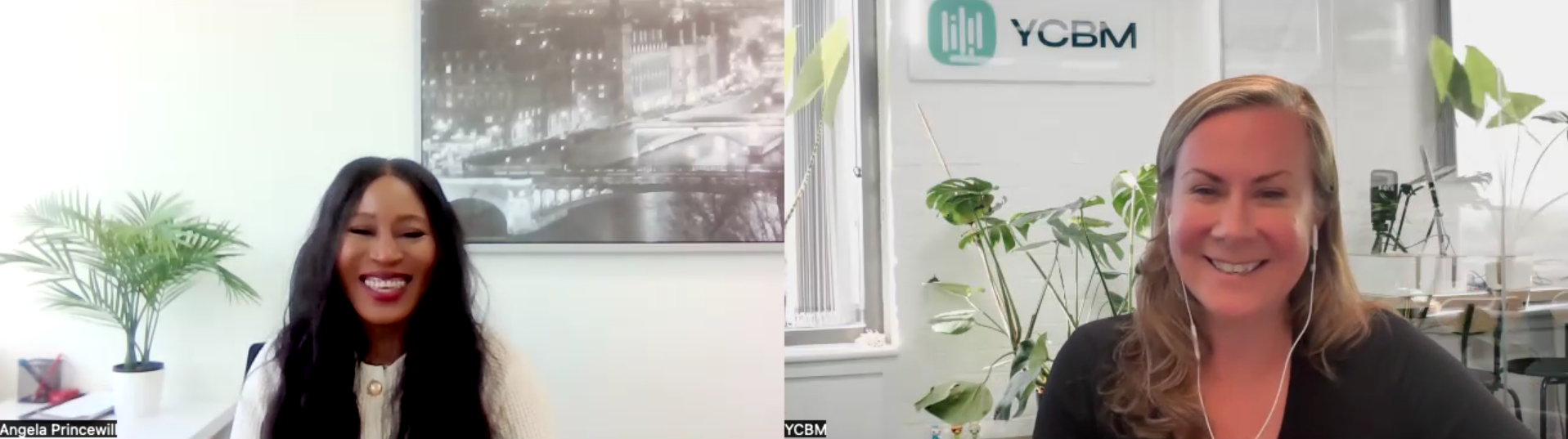
Angela Princewill concentrated on family law, becoming the expert people trust during their most vulnerable moments. This specialization allows her to build up her reputation and positive feedback loop, so she can charge for additional services like ‘one off’ consultation fees.
The pattern is clear: when you become known for solving one specific problem exceptionally well, clients will pay premium prices and refer others without hesitation.
Here's where things get interesting. These entrepreneurs didn't just embrace technology—they strategically deployed it to amplify their strengths while eliminating time-wasting tasks.
Lindsey Pickowicz demonstrates sophisticated workflow automation: "We use Zapier to connect our calendar to our CRM, so that when someone books a call, it automatically updates their contact information in our CRM."
This seamless connection eliminates manual data entry while ensuring no client details fall through cracks.
What every small business has in common is why they needed a client scheduling solution like YouCanBookMe to remove a common and unnecessary headache.
Kathleen Metcalf explains:
We use YouCanBookMe to automate our scheduling process, so that clients can book appointments online without having to call or email us."
She also leverages advanced follow-up systems: "We also use FollowUpBoss to automate our follow-up process, so that we can stay in touch with clients and prospects without having to manually send emails or make phone calls."
Rob Kosberg built automation into his entire sales funnel: "We use ClickFunnels to automate our sales process, so that we can sell our books and other products online without having to manually process orders." His email marketing runs on autopilot too: "We also use GetResponse to automate our email marketing process, so that we can send targeted emails to our subscribers without having to manually write and send each email."
Even cutting-edge AI has found its place. Mike Desjardins shares: "We use ChatGPT to automate our content creation process, so that we can generate high-quality content without having to manually write each piece."
The legal profession, traditionally slow to adopt technology, benefits enormously from smart automation. Angela Princewill explains:
"We have a team of five lawyers. There might be someone that's available. I wanted clients to be able to book them without necessarily having to wait the next day to talk to a receptionist."
She also streamlined payments: "We also use Stripe to automate our payment process, so that clients can pay online without having to manually send us payment."
The key insight? Automation doesn't replace human connection—it creates more space for it.
Make scheduling the easiest part of your business
Join the founders in this article who use YouCanBookMe to automate scheduling, save hours every week, and stay focused on high-value work.

.png?width=1130&height=891&name=coaching%20scheduling%20(3).png)
These founders learned their lessons the expensive way so you don't have to. Their advice cuts through the noise and focuses on what really matters.
Traci Webb wishes she had trusted herself sooner: "I would not spend a lot of time asking other people their advice so much. If I could give my younger self advice, it would be a hundred percent trust your inner yearning, the deeper knowing that you have."
Too many entrepreneurs get stuck in planning mode instead of taking action.
Shawn Mintz learned the importance of thoughtful product development: "I would start off with a well designed product. So I would really give thought to the design and make it a real simple software platform as well."
Rushing to market with a half-baked solution creates more problems than it solves.
Rob Kosberg regrets not creating more content earlier: "I would probably say the only thing that I would do differently, would be, number one, write more books—create more content."
Content builds authority, attracts ideal clients, and works while you sleep.
Geraint Gardner discovered the power of protective boundaries: "I don't worry at night anymore. So as far as what keeps me up at night, I don't worry. I've got a policy for me that I don't respond to emails after 09:00. I don't check my emails after that period—unless it's an emergency. People know not to call me."
Clear boundaries protect energy and, ultimately, client relationships.
Angela Princewill built success through relentless improvement: "I'm always thinking about how can we be better? So we've been fortunate now for 10 years in a row we've won the top family law firm in the Durham region."
Continuous improvement becomes a competitive moat.
Kathleen Metcalf's diverse background became her biggest asset: "I was a real estate assistant, then I was a real estate agent, then I went to work for a real estate coach. And that's where I really saw the marriage of all my background and my experience in the field being useful to all these top producing agents that I listened to, my boss, the coach—she had 65 clients a week, and I worked for her for six years."
Don't discount your unique journey.
These eight entrepreneurs prove that building a profitable business doesn't require sacrificing your personal life or compromising your values.
Their approach centers on three core principles.
- First, clarity beats cleverness. They focused on solving specific problems for specific people rather than trying to be everything to everyone. This specialization allows them to charge premium prices while delivering exceptional results.
- Second, systems create freedom. By implementing their chosen solutions, they've created businesses that run smoothly without lots of manual headaches. Technology handles routine tasks while they focus on high-value activities.
- Third, relationships drive revenue. Despite being addicted to using technology for lots of things, these founders prioritize authentic human connections. They understand that business is ultimately about people helping people solve problems.
The entrepreneurial path doesn't have to mean working 80-hour weeks or constantly stressing about cash flow. These successful founders built sustainable businesses by being intentional about their values, strategic about their specialization, and smart about their systems.
Their stories prove that with the right approach, you can build a business that serves your ideal life rather than consuming it. The tools and strategies are available to everyone—the question is, how you are going to prioritize the time to implement and embrace them?
The prize is a motivated, focused team, streamlined operations and happy customers.
Thank you to everyone who took the time to speak with me:
- Lindsey Pickowicz: Co-founder of The Fitness Project, a business that helps leaders build fit and healthy lifestyles through coaching and nutrition planning.
- Kathleen Metcalf: Founder of Kammbium, a consulting, coaching, and training company for real estate agents, focusing on operations and systems.
- Geraint Gardner: Founder of Melbourne Auctions, a business that provides auctioneering services for real estate agents and property owners.
- Rob Kosberg: Founder of Bestseller Publishing, a company that helps experts write and publish books to attract clients and build their authority.
- Mike Desjardins: Founder of Virtus, a leadership development company that helps medium to large enterprise companies build respectful and empathetic leaders.
- Traci Webb: Founder of Ayurveda Living School, a business that trains Ayurvedic herbalists and health and life coaches, and provides online courses and programs.
- Shawn Mintz: Founder of Mentor City, an online mentoring platform that helps organizations connect mentors and mentees for employee engagement, succession planning, and onboarding.
- Angela Princewill: Founder of AP Lawyers, a law firm that specializes in helping families navigate the complexities of family law.
Written by
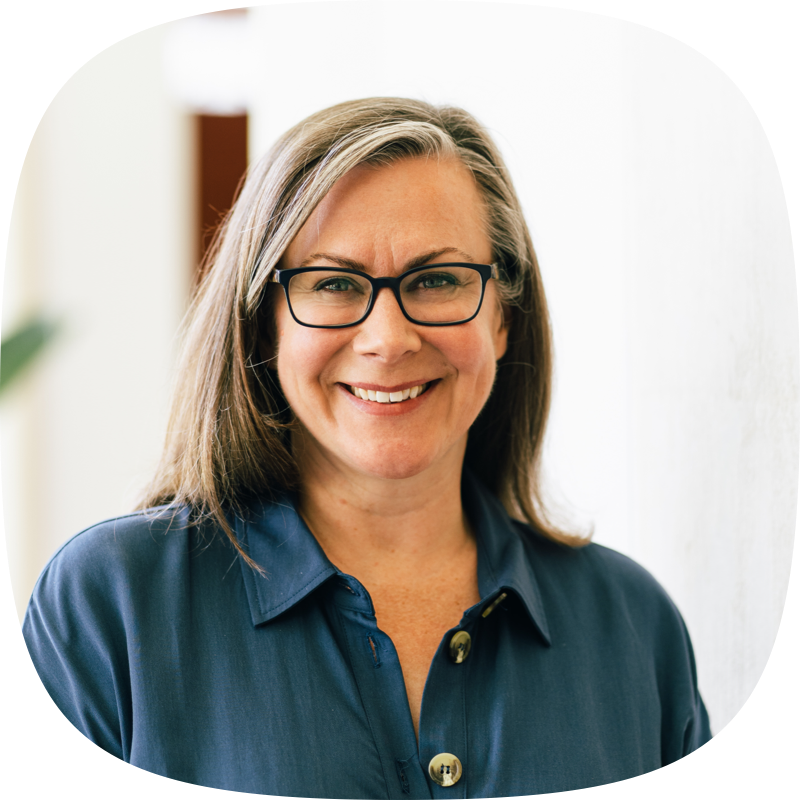
Bridget Harris
Bridget Harris is the co-founder of YouCanBookMe and a Strategic Advisor at Capacity, with decades of experience building customer-focused businesses — from bootstrapping one of the earliest scheduling tools to advising founders and speaking at SaaS conferences worldwide.
Get started today
Join thousands of coaches, consultants, and entrepreneurs who use YouCanBookMe to power their business. Get your first booking in a few minutes.


 4.7 / 5 — Trustpilot

