
Speed to Lead in Real Estate: How to Be First & Win the Client


Create your free booking page
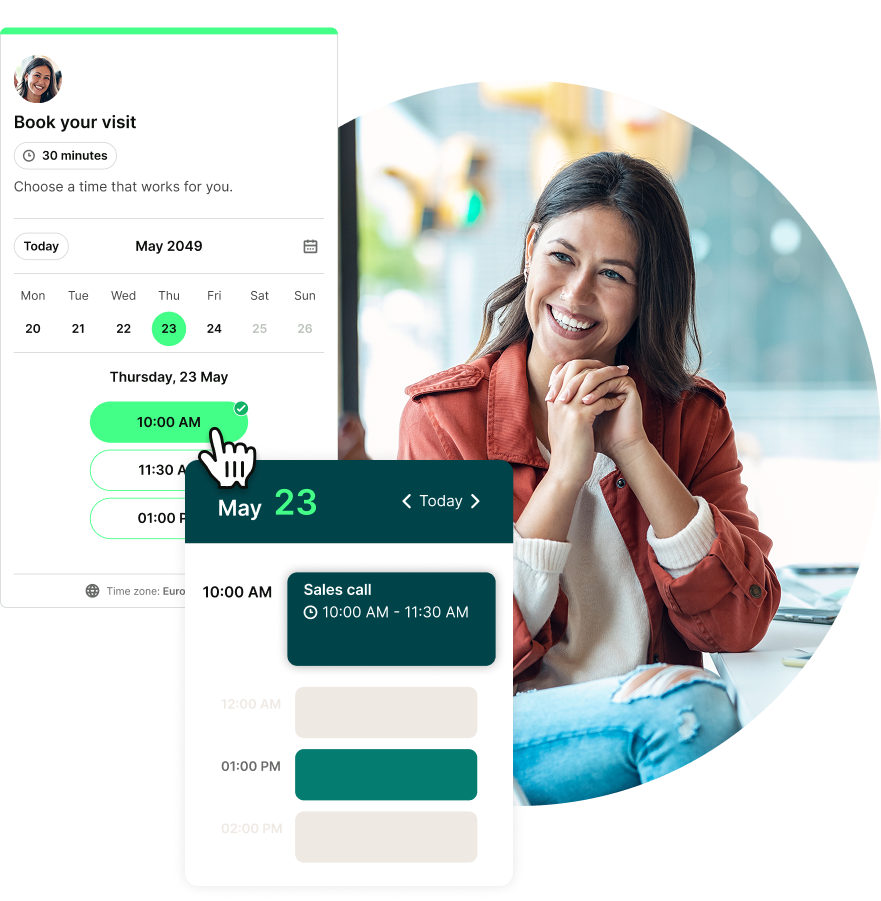
Real estate leads go cold in minutes, not hours. If you're looking to improve speed to lead in real estate, you're likely already losing clients to faster agents. The data is clear: you’re up to 8x more likely to connect with a lead if you respond within five minutes, yet most agents take far longer.
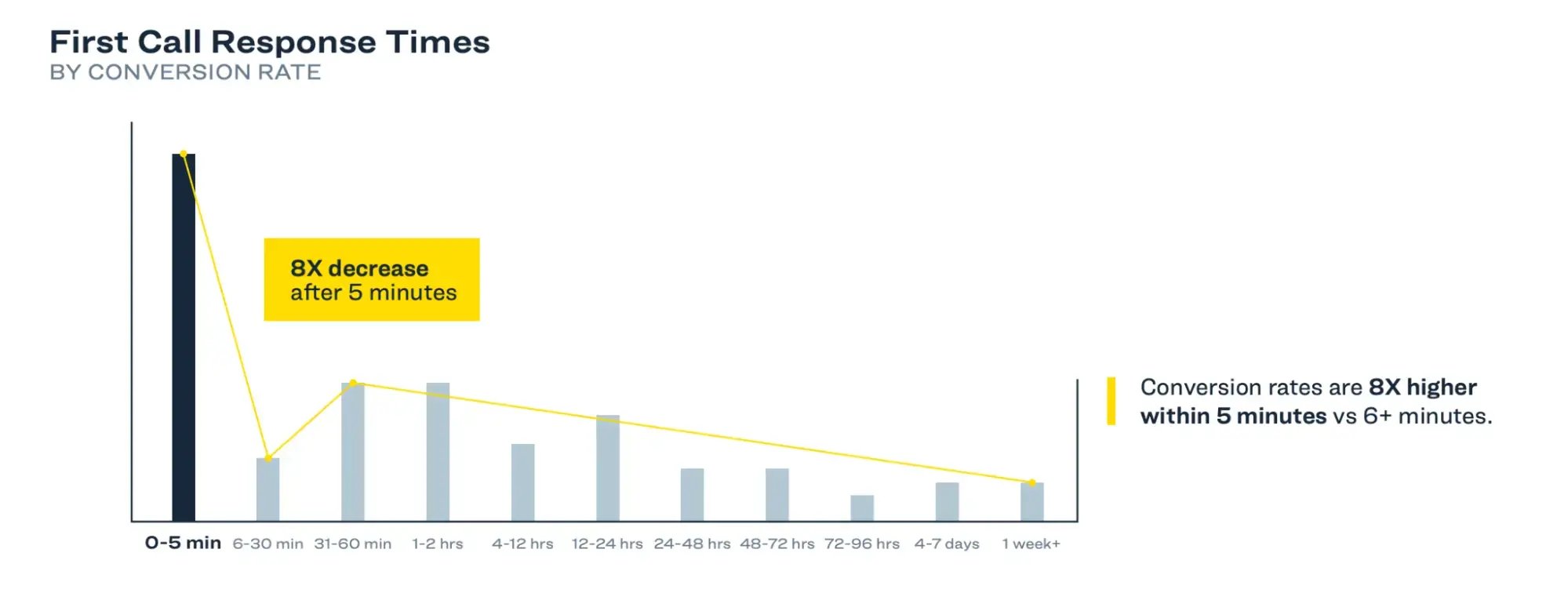
(Source)
Of course, you can’t realistically respond to every new inquiry within five minutes unless you have smart systems in place that reply in seconds. After all, you might be in the middle of a showing, closing a deal, or at your kid’s basketball game.
In this guide, you’ll learn how to build that system so you can respond faster every time, capture hot leads, and turn more inquiries into booked meetings.
Speed to lead in real estate refers to the time between a potential client submitting an inquiry and an agent making first contact, whether by call, text, or email.
In a market where buyers and sellers often reach out to multiple agents at the same time, this window is critical. The agent who responds first is usually the one who starts the conversation, builds trust early, and ultimately wins the client. Even a delay of a few minutes can mean the difference between securing a showing and losing the lead to a competitor.
It’s important to distinguish speed to lead from lead nurturing. While lead nurturing focuses on building relationships over time through follow-ups and ongoing communication, speed to lead is entirely about the initial response. It measures how quickly you engage a new inquiry at the moment their interest is highest.
Real estate is just like any other business: the faster you respond to an inquiry, the more likely you are to win the client. The difference is that in real estate, that window is incredibly short.
And since 52% of buyers start their house-hunting journey by reaching out to an agent, you are often competing in real time. The first agent to respond is usually the one who gets the opportunity, and more often than not, the client.
If there’s one benchmark every agent should know, it’s this: the first five minutes matter most. Respond within 0–1 minute, and you’re operating at an elite level. Within 1–5 minutes, you’re still in a strong position. After that, your chances drop quickly. At 15 minutes or more, you’re often already too late.
You’ve probably seen this advice before, and while the exact numbers get debated, the principle hasn’t changed. The faster you respond, the more likely you are to connect, build trust, and move the conversation forward. That lines up with what buyers actually expect, too. 95% of buyers say responsiveness is a very important quality in an agent.
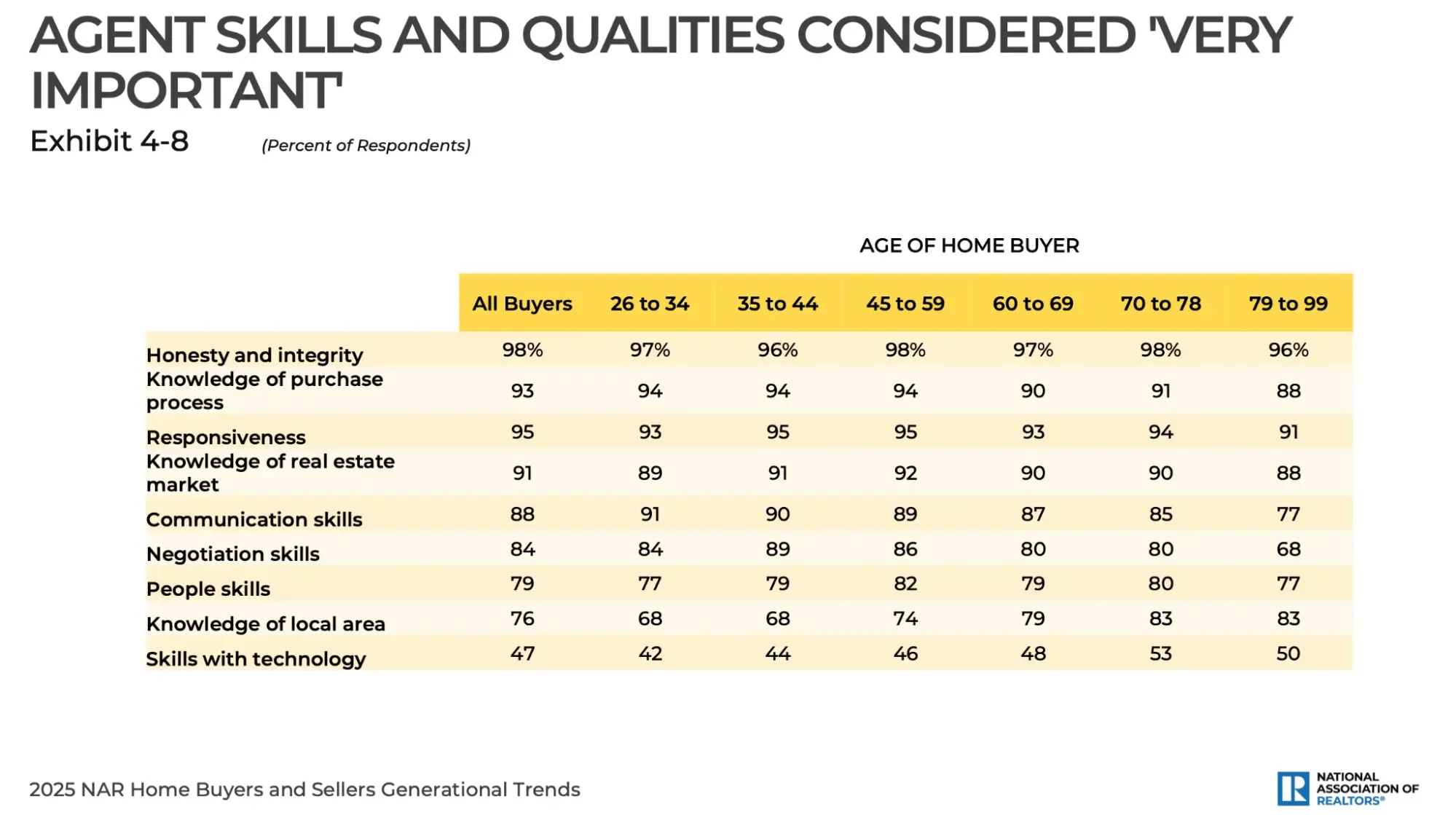
(Source)
Another reason why your speed matters? Real estate isn’t a one-agent game. When someone submits an inquiry, they’re usually contacting multiple agents at once. So, you’re not just racing the clock—you’re racing other agents, too. If you’re not in that first wave of responses, you’re already out of the running.
Sounds harsh, but that’s the reality.
So, how do you actually improve your speed to lead? Let’s break it down step by step, so you can actually implement it. 👇
Before you try to respond faster, figure out exactly how leads reach you now. Look at every source, including:
- Zillow
- Your website
- Referrals
Then, track what happens between the moment a lead comes in and the moment an agent replies. This matters because more of the client journey now starts online. Zillow reports that 36% of sellers find their agent through online channels, up from 15% in 2018, and 33% of buyers say online research played a key role in choosing their agent.
Once you map that path, the weak spots usually become obvious. Maybe your CRM takes too long to assign leads. Maybe notifications get buried. Maybe no one owns weekend inquiries. Maybe leads come in after hours and sit untouched until morning.
🎯 The goal here is simple: find out where speed is being lost before you try to fix it. If you don’t know where the delay happens, you can’t improve it.
You can’t manually respond to every lead instantly, so you need automation. Set up auto-responders for every lead source, but make them feel personal and relevant.
A simple example: “Hey [name], saw you’re interested in [area]. Pulling up some matches now. Want to chat at 2 PM or 4 PM today?” (And if you’re not sure what to write, AI can help you spin up a few variations in seconds.)
Enabling automated messages does two things. It acknowledges the lead immediately and moves them toward a real conversation.
If you’re working with a team, speed breaks down when no one clearly owns the lead. You need a routing system that assigns leads instantly.
Depending on your setup, this could be:
- Round-robin
- First-to-claim
- Location-based routing
- Skills-based routing
The key is simple: every new inquiry gets assigned to someone immediately, with no confusion about who should respond. Every lead needs a clear owner within minutes, not hours.
This is where scheduling tools like YouCanBookMe (YCBM) can help. Instead of manually assigning leads, you can let prospects book directly into your team’s shared availability. Meetings are automatically distributed using round-robin scheduling—so no lead sits unclaimed and no agent gets overloaded.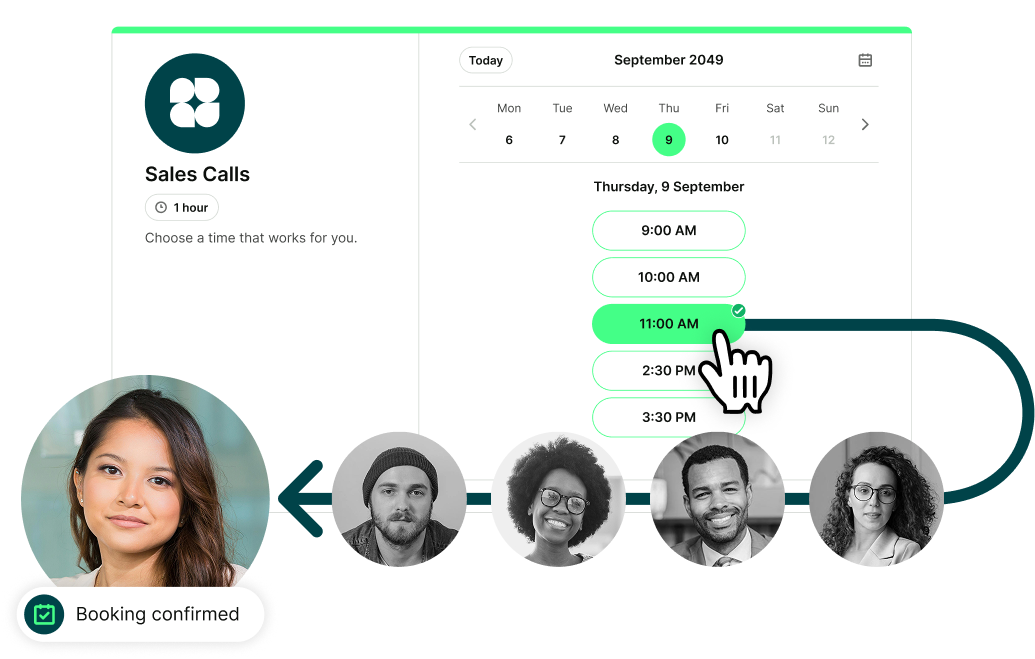
Just as important: have a plan for evenings and weekends. A large share of real estate leads come in outside standard business hours, so without coverage, those leads simply go to someone else.
This is the step most agents miss. Speed to lead doesn’t end with the first reply. It ends when the appointment is actually booked.
The biggest drop-off often happens right after initial contact. You respond quickly, the lead replies, and then you go back and forth trying to find a time for a showing. That delay kills momentum.
Instead, give leads a way to book time with you instantly. Embed a scheduling link directly in your auto-response so they can choose a time for a call or showing on the spot.
For example: “Want to chat? Grab a time that works for you here [insert your scheduling link].”
With tools like YouCanBookMe, you can add your booking page/link to your auto-responder to give your leads a simple way to schedule a call or showing based on your team’s availability. The lead picks a time, it goes straight into your calendar, and the conversation moves forward without unnecessary back-and-forth (which, as you know, can be time-consuming and, again, cost you that lead).
Book more showings while interest is high
Skip the scheduling back-and-forth. Let leads choose a time that works for them and have it land directly in your calendar.

.png?width=838&height=811&name=best%20calendar%20app%20for%20realtors%20(4).png)
Last but not least, you have to measure it all. Track your response times weekly—most agents are surprised by how long it really takes to reply. Next, set a clear target, like responding to every new real estate lead in under five minutes, then review performance by hour and day to spot gaps.
From there, adjust your system. That might mean:
- Improving routing
- Adding after-hours coverage
- Tightening your follow-up process
Speed to lead isn’t a set-and-forget fix. It’s a weekly operating rhythm. The more consistently you track and refine it, the more conversations and opportunities you capture.
If you want to improve speed to lead, the biggest gains come from having the right tools working together behind the scenes.
Here are the core ones to focus on:
- CRM with lead routing: Solutions like Follow Up Boss, Sierra Interactive, and Chime help you capture incoming leads, assign them instantly, and track response times. This gives every lead a clear owner from the start.
- Automated dialers and call tools: Platforms like Calldrip and Mojo Dialer call new leads the moment they submit a form, helping you connect while their interest is still high.
- SMS automation: SMS is often the fastest way to reach a lead. Tools like Capacity’s SMS Intelligent Virtual Agent enable instant, personalized text responses, so every inquiry gets a quick reply even when you are not available to jump on a call.
Example SMS auto-response: "Hey [name]! Saw you're interested in [area], great choice. I'm pulling up some options for you now. You can grab a time to chat here: [booking link]. Talk soon!"
- Scheduling software: Tools like YouCanBookMe allow leads to self-book a call or showing directly into your calendar, without any delays.
Speaking of scheduling software, you really do need one. Without it, you won’t actually get the lead booked into your calendar, and that’s the ultimate goal.
If you call a lead to agree on a time for a showing, you can easily spend a few minutes going back and forth on availability. If they need to reschedule because something comes up, that process starts all over again. Without a proper system in place, this quickly becomes time-consuming. And in the meantime, an agent with a more streamlined approach can step in and win the opportunity.
With a real estate scheduling tool like YCBM, you can:
- Let leads book instantly: Add your scheduling link to your website, auto-responder, or first text means leads can book right away, even if you’re in the middle of a showing.
- Capture opportunities 24/7: A booking link works around the clock, so leads can schedule at any time, including late evenings, without requiring you to be available.
- Collect key information upfront: Booking forms let you gather important details before the meeting, such as budget, preferred neighborhoods, property size, and desired amenities.
- Offer different appointment types: Whether it’s consultations, property showings, listing presentations, or open houses, you can present all your services clearly.
- Reduce no-shows with SMS and email reminders: Automated SMS notifications and emails keep clients informed, remind them of upcoming meetings, and help maintain engagement.
Turn more leads into booked showings
Start using scheduling automation to remove back-and-forth, stay available 24/7, and convert more conversations into confirmed appointments.

.png?width=1061&height=1092&name=real%20estate%20showing%20software%20(1).png)
Theory and tools—check! ✅ Now, here’s a quick checklist to make sure every step, from the moment a lead comes in to the moment they book a showing, is working as it should.

Wrapping up
Real estate speed to lead works best when it’s treated as a system.
Map where your leads come from, automate your first response, route them clearly, make it easy to book, and keep tracking how it’s all performing. Being fast helps you get in first, but removing friction, especially around scheduling, is what actually gets the appointment locked in.
Sign up for YouCanBookMe for free today and add a booking link to your next auto-response to see how it changes the way leads move forward.
FAQs
How fast should a real estate agent respond to leads?

As fast as possible—ideally within the first minute. Research consistently shows that responding within 60 seconds puts you at an elite level, while responding within 1–5 minutes still gives you a strong chance of connecting. After 5 minutes, your odds of reaching the lead drop significantly, and by 15 minutes or more, you're often too late. This matters because buyers and sellers typically contact multiple agents simultaneously, so the first agent to respond is usually the one who earns the conversation.
The practical solution for most agents is automation: set up an instant auto-responder for every lead source so the lead is acknowledged in seconds, even when you're with another client or offline.
What is a good speed-to-lead time for real estate?
Under 5 minutes is considered strong. Under 1 minute is elite and typically requires automation. Anything over 15 minutes for high-intent leads is risky. Same-day or next-day responses are generally too late for leads who submitted an online inquiry.
How do I respond to real estate leads instantly when I'm in a showing?
The key is having systems in place that respond on your behalf while you're occupied. Set up auto-responders on every lead source—your website, Zillow, Facebook, and any others—so that every new inquiry receives a personalized message within 60 seconds, even if you're unavailable.
That message should acknowledge the lead, reference their area of interest, and include a direct booking link so they can schedule a call or showing on their own without waiting for you to get back to them.
What tools help improve speed to lead in real estate?
Four main categories of tools make the biggest difference:
- CRM with lead routing (Follow Up Boss, Sierra Interactive, Chime)—captures leads from all sources, assigns them instantly, and tracks response times.
- Automated dialers (Calldrip, Mojo Dialer)—calls new leads the moment they submit a form, connecting you while their interest is at its peak.
- SMS automation (Capacity)—enables instant, personalized text responses so every inquiry gets a quick reply even outside business hours.
- Scheduling software (YouCanBookMe)—lets leads book a call or showing directly into your calendar, eliminating the back-and-forth that kills momentum after initial contact.
Used together, these tools can take your speed to lead from minutes down to seconds.
Does speed to lead matter for rental leads as well as sales?
Absolutely! The same principles apply. Rental leads are often even more time-sensitive than sales leads, since renters are typically working within tighter timelines and are simultaneously inquiring with multiple properties or agents. The competitive dynamic is identical: the first person to respond starts the conversation, builds early trust, and is most likely to secure the appointment.
Renters also frequently search and inquire outside of business hours, making after-hours automation and 24/7 booking availability especially important. Setting up instant auto-responders, SMS follow-up sequences, and a self-serve scheduling link works just as effectively for rental inquiries as it does for buyer and seller leads.

Written by
Paulina Major
Paulina Major is a freelance B2B content writer with six years of experience. Since 2024, she has written 100+ articles on scheduling and personally tested and reviewed 30+ booking tools, helping small business owners choose software and simplify their booking processes. As a solopreneur managing her own clients and calendar, she brings firsthand experience to her advice on scheduling, time management, and running a business.
Get started today
Join thousands of coaches, consultants, and entrepreneurs who use YouCanBookMe to power their business. Get your first booking in a few minutes.


 4.7 / 5 — Trustpilot

