
What 35 Customer Interviews Taught Us About Building a Better Product


Create your free booking page
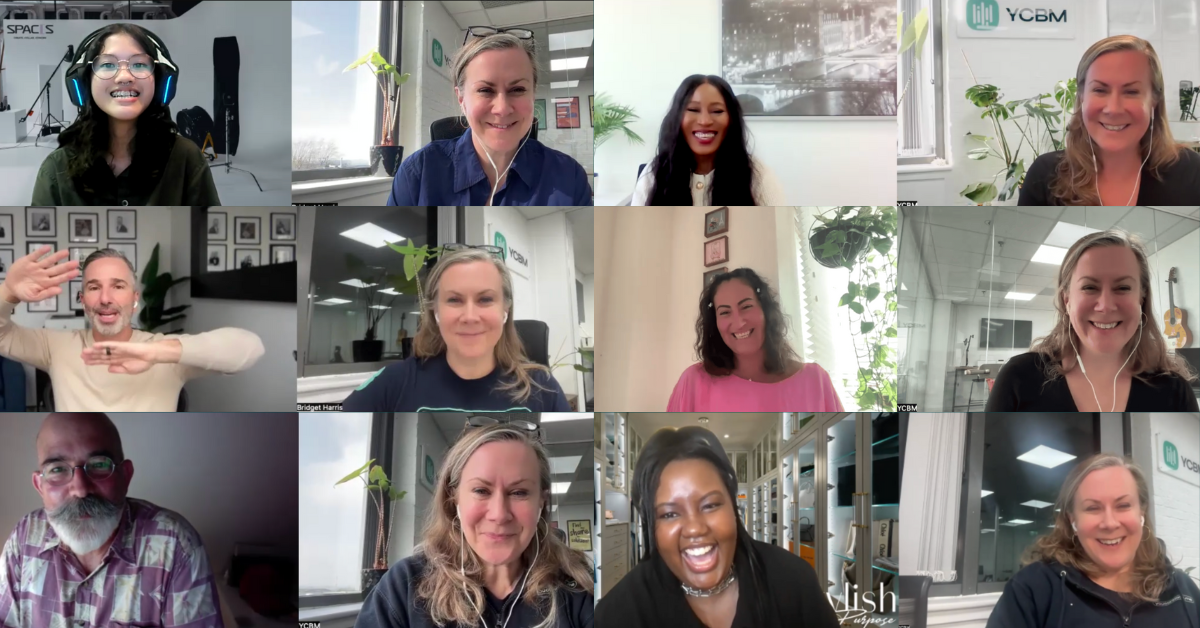
Just over a year ago, I started regularly interviewing our most successful (and favorite) customers—our “BFFs,” as we called them internally. We recorded the conversations and then edited and repurposed them for YouTube Shorts, the YCBM blog, and customer case studies on our website.
In total, I’ve spoken to 35 customers, across finance, photography, real estate, beauty, coaching, mentoring, yoga, fitness, and web development. It goes without saying that I now know far more about our customers than I did a year ago—and honestly, I wish I’d started this ten years earlier!
That hindsight wasn’t just about missed content opportunities—it was about understanding. Talking directly to customers changed how I see our product, our positioning, and the role we play in their businesses.
But committing to customer storytelling in a meaningful way isn’t something you do lightly.
Of course, investing time, money, effort, and attention into something like this always comes with the usual risks. You can lose momentum. You might not know what to do with the content. You may struggle to find an audience. Or worse, you risk wasting your customers’ time on something that doesn’t end up being useful for them.
We did go back and forth on formats and questions, but the important thing is that the team persisted. And the results made the effort more than worth it.
From the interviews we’ve produced so far, we’ve seen:
- Over 57,000 views on YouTube
- Over 5,500 visits on the blog
- New connections and a growing community on LinkedIn (with over 10,000 impressions)
- “Quotable” customer stories shared weekly with our internal team to educate and feed back into product use cases
- Rotating profiles of real customers featured on our YCBM homepage
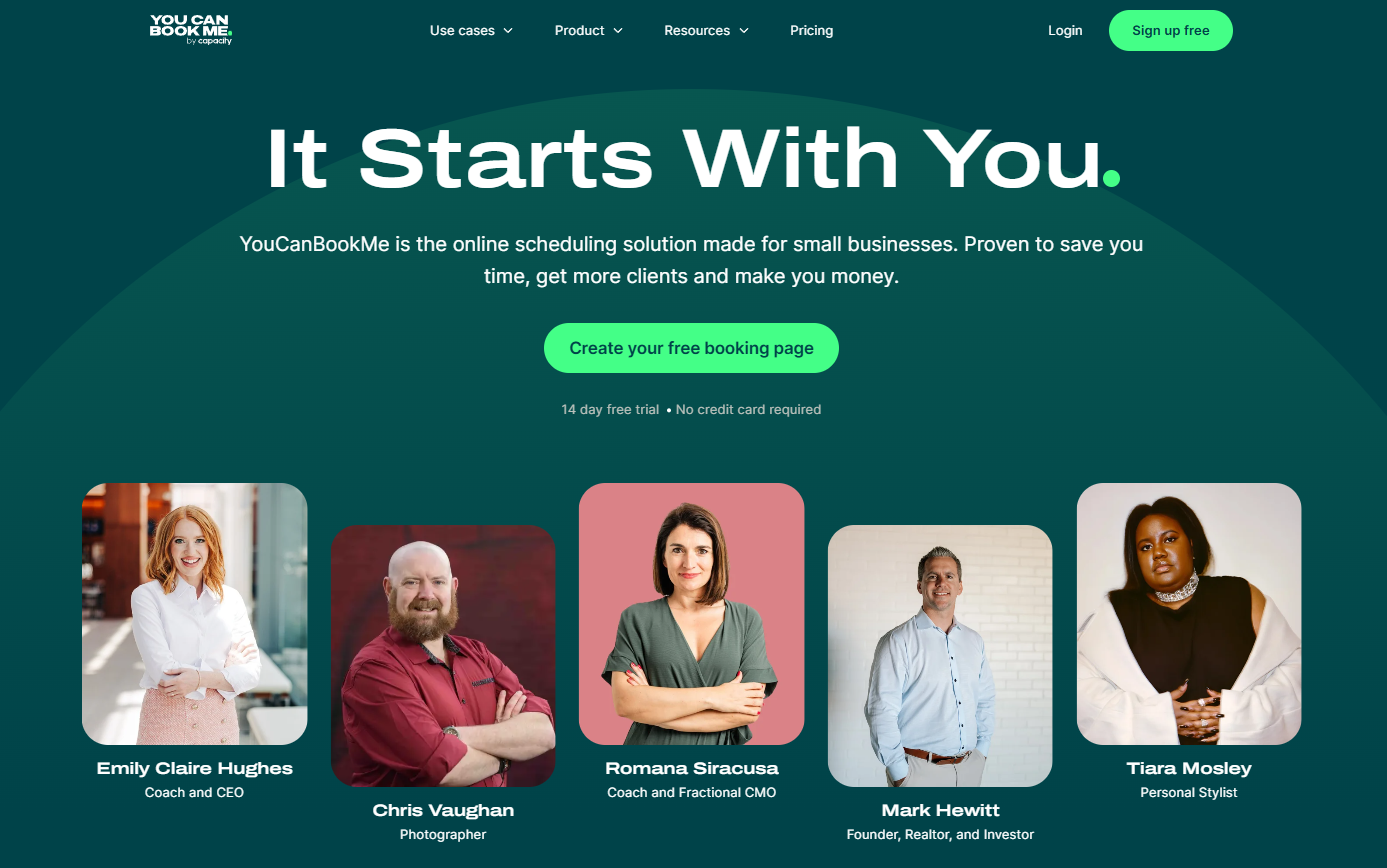
Your customers are the best advertisement you can get for your product, so I wanted to find out:
-
Why have some of our customers used YCBM for over 10 years?
-
Why did they switch from better known competitors?
-
Why do they stay happy advocates and recommend YCBM to everyone they meet?
The answer is not difficult to figure out. On paper, it’s what we call product–market fit. But that term always feels a bit transactional.
What I’d really say is this: we fell in love with the problem—and they fell in love with the solution.
I spoke to coaches ranging from real estate to book writing, and the common theme among all of them was how much time and energy they put into building relationships with their clients.
At the same time, setting boundaries mattered. They use scheduling to block out Mondays or Fridays, reduce last-minute cancellations, and send reminders to prevent no-shows. All of that is technical, behind-the-scenes software work—but the result is very human. Boundaries are set by YCBM, so the relationship itself can move forward without that awkward friction.
For communication professionals, presentation mattered just as much as functionality. They care deeply about how the tool looks and feels because highly customized, personal communication and strong branding are central to how they work with clients. In those cases, the booking experience isn’t just practical—it’s part of how they show up professionally.
Equally, the successful small businesses I spoke to—those who have moved beyond being “solopreneurs” and are now managing teams, outside contractors, multiple clients, and many moving parts—need all the automation they can get, so they can stay ahead of the curve and scale when they’re ready.
Another helpful way to think about many YouCanBookMe customers is this: bookings are their business.
These are service-based and professional businesses offering time slots to deliver their expertise—financial advice, photography sessions, coaching, consultations. When you’re out doing the work, you need your calendar filling up without stress or hassle, which is why many of them went looking for the best online scheduling tool to fit their needs. Once they found YCBM, they never looked back!
So what did I learn from speaking to so many different businesses?
Every single one shared one overriding trait: a deep and unwavering commitment to customer care. Gone are the days of “take it or leave it.” Their businesses live and die by how they treat people.
Reputation, referrals, word of mouth, reviews, and thoughtful follow-ups drive their growth. Many told me outright that this is how their businesses scale.
But it goes deeper than business metrics. Our customers care about people because that’s often why they started their businesses in the first place. They care about homes, careers, branding, opportunities, personal confidence—even supporting families through divorce. In short, helping real people solve real problems is what motivates them.
In almost every interview, when we dug deep enough, the transformation of their customers was what got them out of bed in the morning.
Secondly (and let’s face it, the reason I started interviewing them in the first place), they love automation, technology, and increasingly, AI.
Many YouCanBookMe customers were early adopters. Many have been with us for years—one for over 13 years. It is their relentless drive to find efficiencies in their businesses that led them to YCBM in the first place. Now, they use our tool to create onboarding flows, capture sales leads, and track onsite visits.
They’re builders, optimizers, and problem-solvers by nature.
Another theme that came up time and time again, across industries and backgrounds, was regret—not about failure, but about waiting.
They wished they’d started earlier. They wished they hadn’t let self-doubt creep in. With experience, they now recognize that overcoming hurdles is their superpower.
When I asked each of them, “What keeps you up at night?”, I was surprised how many answered: only how to serve customers better—and otherwise enjoyed a pretty good 8 hours of nod!
I’d like to think there’s a correlation between YCBM customers and those who have got it together and figured it out. A history of solving problems and just going for it clearly has an impact—you realize, in hindsight, that nothing was really stopping you from starting in the first place.
These three traits—being motivated by the people they serve, growing through experience, and being tech-first in how they run their businesses—came up time and time again.
Since we started highlighting our customers this way, I can honestly say we will never go back to radio silence. It’s been a true pleasure and privilege to speak to each one and understand what makes them tick. It’s also given me the opportunity to personally thank them for trusting our product for so many years.
After learning how these amazing founders run their own businesses, I feel even more honored that they chose us to take care of that most important part of the relationship—the moment a customer books them.
Written by
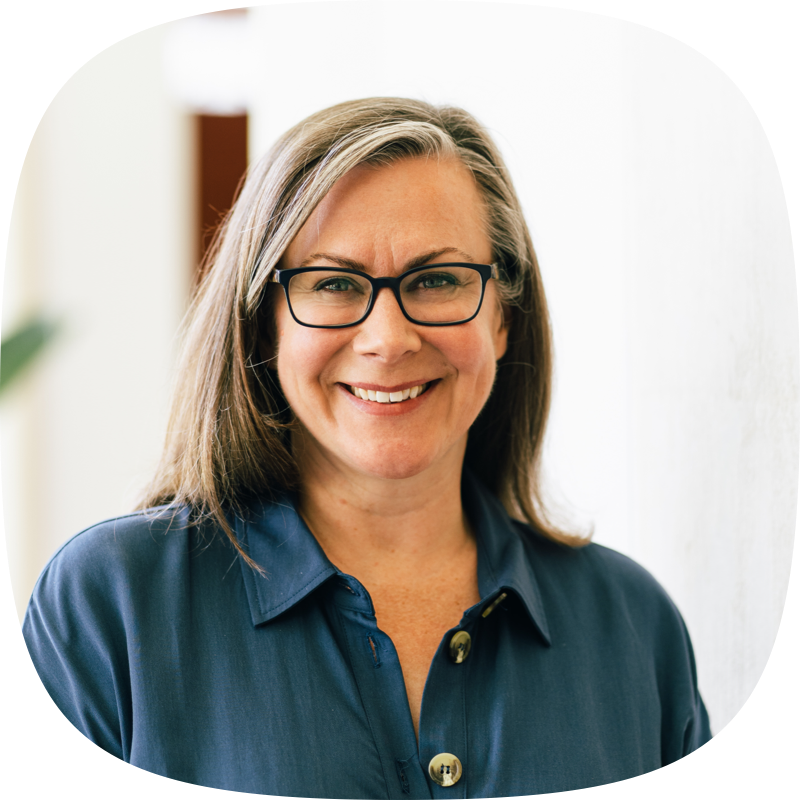
Bridget Harris
Bridget Harris is the co-founder of YouCanBookMe and a Strategic Advisor at Capacity, with decades of experience building customer-focused businesses — from bootstrapping one of the earliest scheduling tools to advising founders and speaking at SaaS conferences worldwide.
Get started today
Join thousands of coaches, consultants, and entrepreneurs who use YouCanBookMe to power their business. Get your first booking in a few minutes.


 4.7 / 5 — Trustpilot

